
Overview
The 2-Day Tanzania Lodge Safari is the express tour - the answer for travelers who only have a long weekend between a Kilimanjaro descent and a Zanzibar flight, or who want a real taste of African wildlife without committing a full week. In 48 hours you visit two of the country's most concentrated game parks: Tarangire, famous for its baobab-studded landscape and the largest elephant herds outside the Serengeti, and the Ngorongoro Crater, a 260 square-kilometre collapsed caldera that holds the highest year-round predator density on the continent.
Be honest with yourself about what this trip is. It is a best-of compilation, not a slow appreciation. Day 1 sees you in the Land Cruiser by 7:30am for the two-hour transfer to Tarangire, on game drive by 11am, and at a lodge near Karatu by sunset. Day 2 starts in the dark - 5:30am wake-up, on the crater rim by 7am to descend the 600m switchback road as the floor wakes up - and ends with the long drive back to Arusha at sunset. The hours in the vehicle are real. The Land Cruiser has no air conditioning, the windows are usually open, and red dust gets into everything: your camera bag, your nostrils, the seams of your jacket, your second-day breakfast. If you are someone who needs a slower pace, book the 3-day. If you have 48 hours, this works.
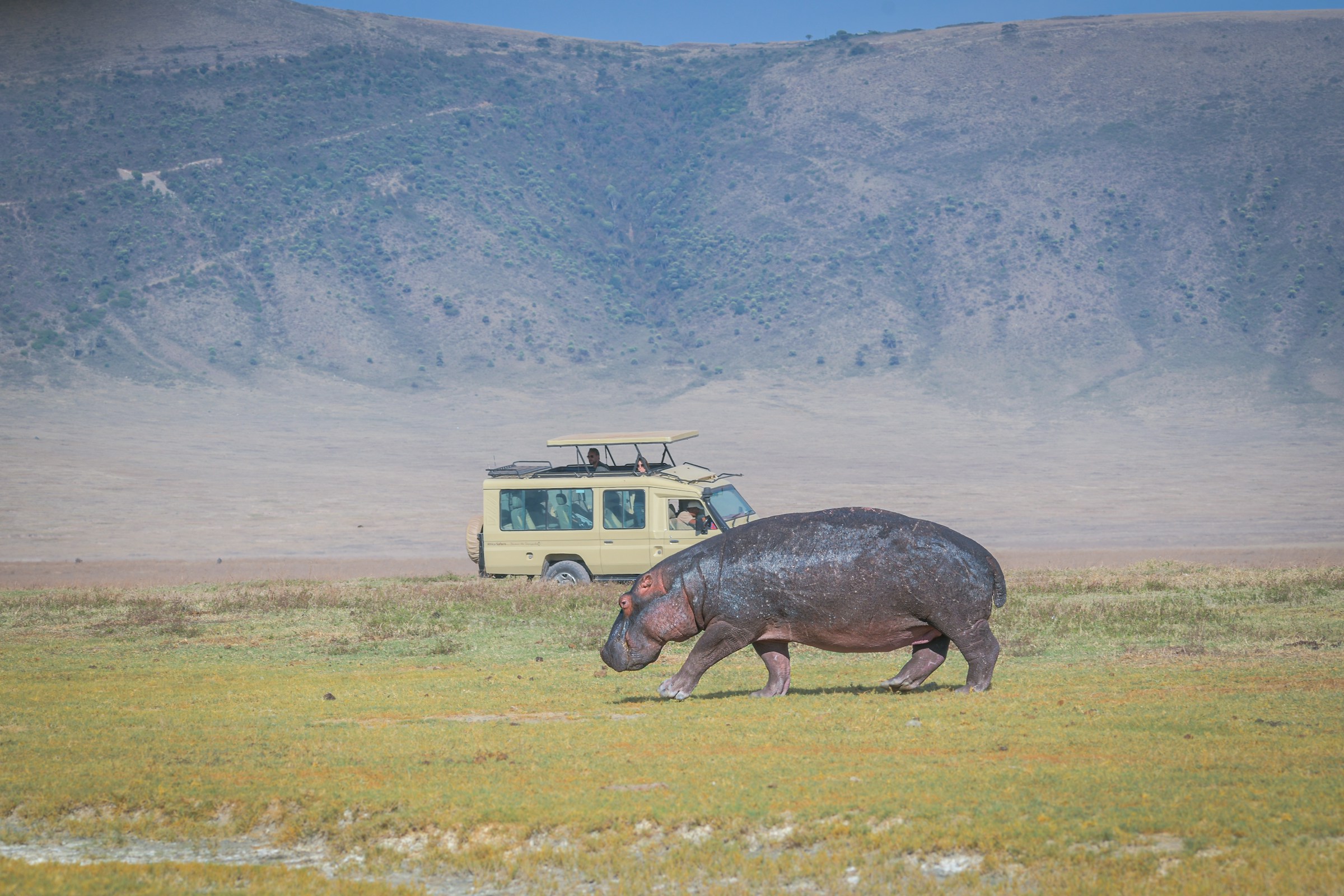
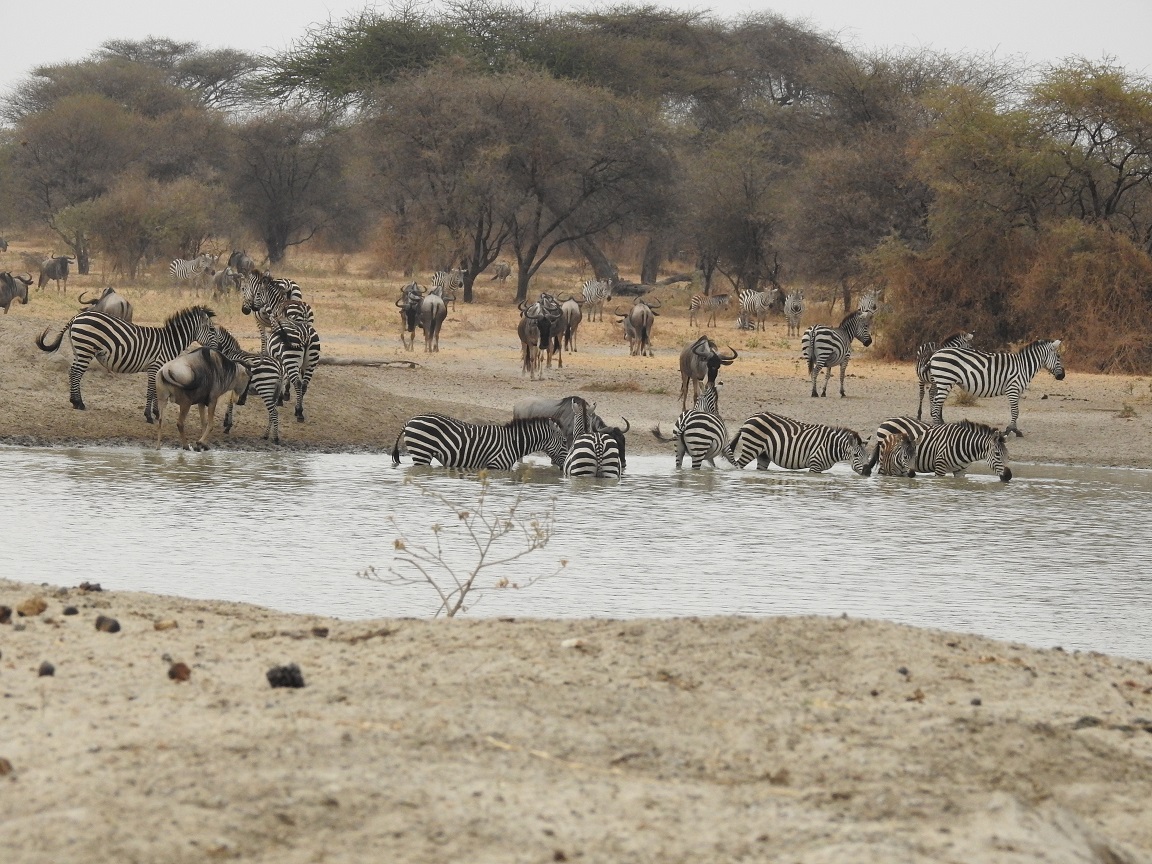
What you will see, almost certainly: large elephant family groups in Tarangire (often crossing the road meters in front of the vehicle), plains zebra, blue wildebeest, Cape buffalo, Maasai giraffe browsing the umbrella thorns, hippos snorting in the river pools, warthogs trotting tail-up across the track. The Ngorongoro floor delivers lions in the open - nearly a guarantee - usually on a kopje at the morning warm-up or shaded under a Land Cruiser at midday. Hyenas, jackals, Grant's and Thomson's gazelles, hartebeest and zebra herds in the thousands.
If you are lucky: a leopard in a sausage tree at Tarangire (perhaps 20 percent chance in the limited hours), the resident black rhinos on the crater floor (around 20 percent - they keep to themselves), a cheetah sprint, a serval picking through long grass at dawn. A pride of lions on a fresh kill is the moment that decides the trip.
The payoff is the crater itself. There is no other place on earth where you can stand at sunrise on the rim of a 600m collapsed volcano and see, with the naked eye and inside a single afternoon, lion, elephant, buffalo, rhino and leopard moving across the same plain. Two days is enough to know you'll come back for more.
Be honest with yourself about what this trip is.
What to Expect
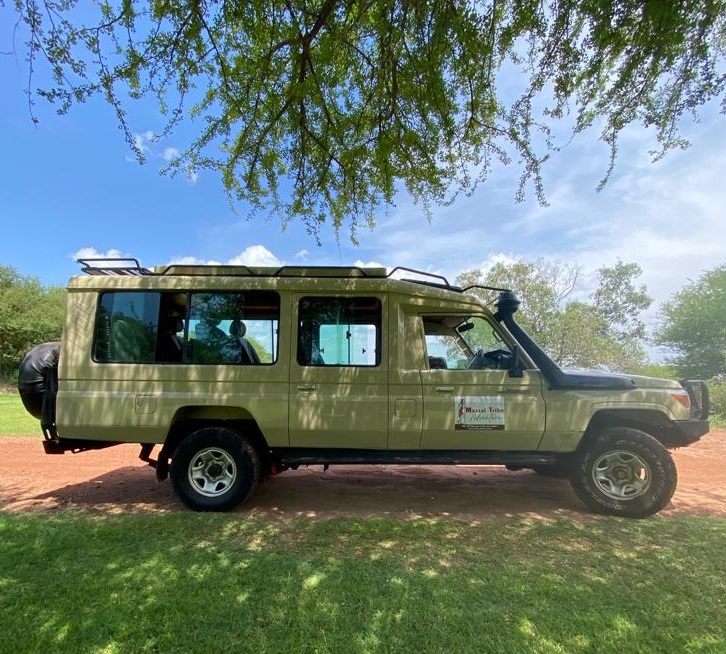
Most of your trip is spent inside a Toyota Land Cruiser - eight to nine hours a day with a pop-up roof open. The vehicle is a working safari rig: bench seats for four to six guests, three forward-facing rows with proper window space for each passenger, no air conditioning, charging ports for cameras and phones, a cool box stocked with bottled water. Your guide-driver does double duty, spotting wildlife and reading the bush, and is also the one person who matters most for the quality of the trip. We use only KATO-certified, English-fluent guides who have worked these parks for years.
The pace alternates between long, quiet road sections and intense bursts of action. You'll drive forty minutes through grass with nothing to see, the diesel growling, the radio crackling, the dust streaming through the open roof, then suddenly the radio call comes in and you accelerate to find ten other vehicles pulled up around a pride of lions. There is also the cold tea hours - that stretch in the middle of the day where the predators are sleeping in shade and nothing moves and you eat your packed lunch and try not to nod off. That is also safari. The good moments only feel that good because of the empty stretches.
Dawn and late afternoon are the gold hours. Predators hunt at edges of day; midday belongs to the herbivores grazing in heat shimmer. Mornings begin at 5:30 or 6:00am, and you will be glad of every minute. By 2pm the light goes flat and the animals lie down. By 7pm you are back at the lodge with a cold beer and the smell of grilled meat from the kitchen drifting across the lawn.
Lodges on this route are mid-range comfortable - en-suite hot showers, mosquito-netted beds, a pool, three-course dinners with vegetarian options, a fire pit. Power is sometimes generator-based and may dip overnight. WiFi is usually present in the bar area, slow and sometimes broken. Bring a paperback. The point is to be unplugged.
Clothing-wise, you'll wear the same neutral tan or olive trousers and shirt two days running and not care. Bright colors and patterns startle wildlife and announce you for kilometres. Blue and black attract tsetse flies, which bite hard. You'll arrive home smelling of dust and sun and grass, and you will be sorry the trip is over.
Most of your trip is spent inside a Toyota Land Cruiser - eight to nine hours a day with a pop-up roof open.
Itinerary
A walk through the route, with distances, hike times and where you'll sleep.
Arusha to Tarangire National Park
Your safari begins at your Arusha hotel around 7:30am - your guide arrives in a custom Land Cruiser, loads your luggage, runs a quick briefing over coffee, and you set off west. The road to Tarangire is paved for the first 90 minutes, then turns to a red graded gravel that throws a plume behind you for kilometres. You arrive at the park gate around 10:30am - registration, last bathroom stop, and into the park by 11. Tarangire is the giant in disguise. Its 2,850 square kilometres are scattered with thousand-year-old baobab trees - some of them with trunks ten metres around - and crossed by the Tarangire River, the lifeline that draws the highest concentration of elephants of any park in northern Tanzania. You'll see them in family groups of fifteen or twenty, often crossing the road meters from the vehicle, calves shielded between elder cows. Beyond elephants, expect zebra, wildebeest, impala, eland, hartebeest, giraffe and the smaller things: dwarf mongoose colonies in fallen baobabs, hornbills calling across the canopy, the white-bellied go-away-bird that gives Tarangire half its soundtrack. Picnic lunch at a designated site under a fig tree. Game drive continues through the afternoon, then exit around 4:30pm for the 90-minute transfer to a comfortable lodge near Karatu on the Ngorongoro highlands. Dinner, a warm shower, and an early night - tomorrow starts in the dark.
- Largest elephant herds in northern Tanzania
- Iconic baobab landscape
- Tarangire River wildlife concentrations
Ngorongoro Crater and return to Arusha
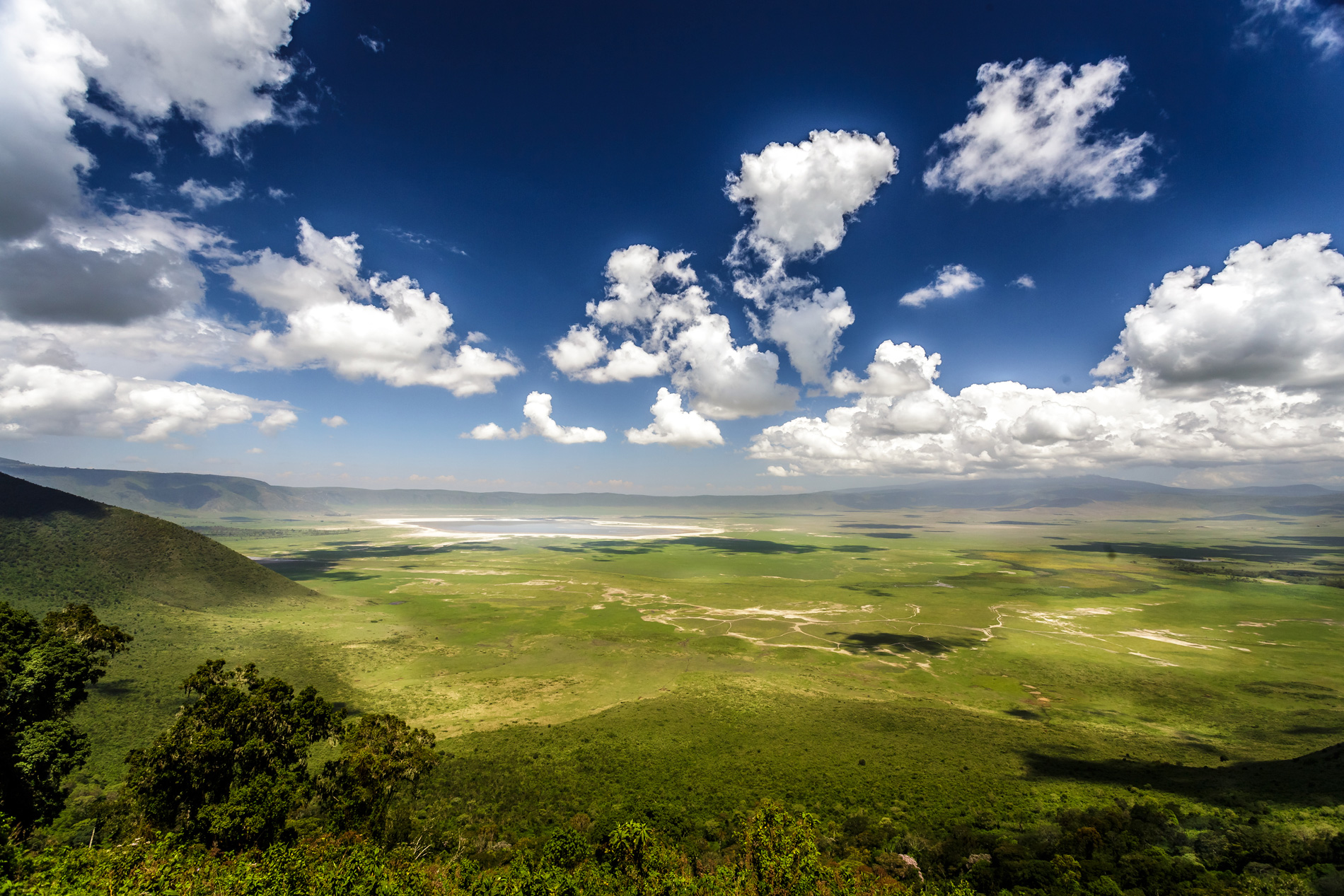
5:30am wake-up, breakfast at 6, on the road by 6:30. The drive from the lodge to the Ngorongoro Crater rim takes about an hour through misty highland farms - cool morning air, the smell of woodsmoke from Maasai bomas, dew on the windshield. The descent road into the crater drops 600m in tight switchbacks; from the rim you look down into a sunken garden 19 kilometres across with a thread of soda lake glinting at its centre. By 8am you are on the crater floor. The next six hours are the densest wildlife viewing of your life. Resident lion prides patrol the open grassland - one famous pride hunts here in plain view - and elephants browse the fever tree forest, buffalo herds graze beside zebra and wildebeest, hippos pile into the Mandusi swamp. Black rhino is the species everyone hopes for; sightings are real but distant, often a black shape moving slowly through high grass at a kilometre. Lunch is a packed box eaten at the picnic site beside the hippo pool - watch for kites that will steal a sandwich from your hand. Game drive continues until about 2:30pm, then the long ascent back up the crater road. Transfer to Arusha follows - 4 to 5 hours including a stop at a coffee plantation cafe. Drop at your hotel or onward connection around 7pm.
- Descending 600m into the crater at dawn
- High chance of lion sightings
- Possible black rhino on the crater floor
What you'll see
Sighting probability across all parks visited.
Plains zebra
Common
Blue wildebeest
Common
Cape buffalo
Common
Grant's gazelle
Common
Thomson's gazelle
Common
Common impala
Common
Warthog
Common
Hippopotamus
Common
African elephant
Likely
Maasai giraffe
Likely
Olive baboon
Likely
Vervet monkey
Likely
Lion (Ngorongoro almost certain)
Likely
Spotted hyena
Possible
Black-backed jackal
Possible
Kirk's dik-dik
Possible
Leopard
Rare
Cheetah
Rare
Black rhino (Ngorongoro only)
Rare
Serval
Rare
What a typical day looks like
- 06:00
Wake-up coffee or tea brought to your room
- 06:30
Game drive departure - predators most active at dawn
- 10:00
Hot breakfast in the bush: boiled eggs, sausage, fruit, coffee
- 11:00
Continue game drive
- 13:00
Lunch back at lodge or picnic inside the park
- 14:00
Optional rest or pool time at the lodge
- 16:00
Afternoon game drive - predators active again
- 18:30
Sundowner drinks at a lookout
- 19:30
Dinner at the lodge
- 21:00
Bed - early start tomorrow
Fitness
Fitness Required
There is no fitness floor on this safari. If you can sit in a vehicle and climb a small step into a Land Cruiser, you can do this trip - kids from age 5, grandparents in their 80s, anyone in between. There is no walking required beyond moving from vehicle to lodge and back. What the trip does demand is different. Eight to nine hours a day inside a vehicle, much of it on washboard dirt roads, will physically tire you in a way that is hard to predict. The constant low-grade vibration is genuinely hard on lower backs. Bring a small lumbar cushion if you have any history. The pop-up roof is the photographer's best friend, but standing for two hours to shoot a leopard means your legs and shoulders will know about it the next day. Motion sickness affects more people on safari than they expect. The roads inside the parks are corrugated, and the driving is necessarily stop-start as wildlife is spotted. If you ever get queasy on winding mountain roads, bring Dramamine, Stugeron or ginger candies. Sit forward in the vehicle and look at the horizon. Early starts are unavoidable. Predators are active at first light, so wake-ups at 5:30am are common, sometimes earlier on the crater day. If you struggle with early mornings, the safari rhythm will be tough on day two even if day one was fine. Sun exposure is constant. The pop-up roof shades you but you'll be in equatorial sun every time you stand up. Wide brim hat, SPF 50, UV-protective sunglasses are essential. Dust is unavoidable - those with asthma or sinus issues should bring a buff or thin face covering for the dustiest stretches. Finally, the long road days between parks - particularly the 4-5 hour transfer back to Arusha on Day 2 - can feel grueling at the end. Stay hydrated, accept that you'll be tired, and remember most of the world will never see what you're seeing.
What's Included
- Park & conservation fees
- Professional safari guide
- Lodge accommodation
- All meals on safari
- All game drives in a 4x4 with pop-up roof
- Airport & hotel transfers
- Bottled drinking water in the vehicle
Not Included
- International flights
- Tanzania visa
- Tips for guide & lodge staff
- Alcoholic & soft drinks
- Travel & medical insurance
- Items of personal nature (laundry, calls, souvenirs)
- Optional activities (hot air balloon, spa, walking safari)
Before you go
FAQ
What animals will I definitely see?
What animals are the rarest?
How close do we get to the animals?
Are the vehicles air-conditioned?
What about meal quality?
Is it safe? Will lions attack the vehicle?
How much should I tip?
Can I customize this trip?
You might also like
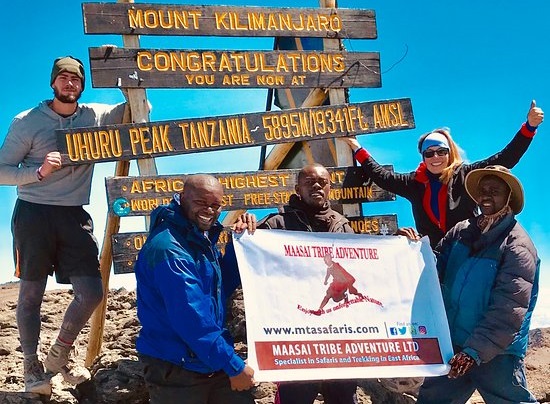
Kilimanjaro - Marangu Route (5 Days)
The 'Coca-Cola Route' - the oldest and most well-established route. The only route with hut accommodation (dormitory style) rather than tents. The shortest route to the summit.
3-Day Tanzania Lodge Safari
Extended safari adding Lake Manyara to Tarangire and Ngorongoro. Ideal for tree-climbing lions and flamingos.
4-Day Tanzania Lodge Safari
Safari including Serengeti (1 night) along with Tarangire and Ngorongoro. Experience the endless plains of the Serengeti.
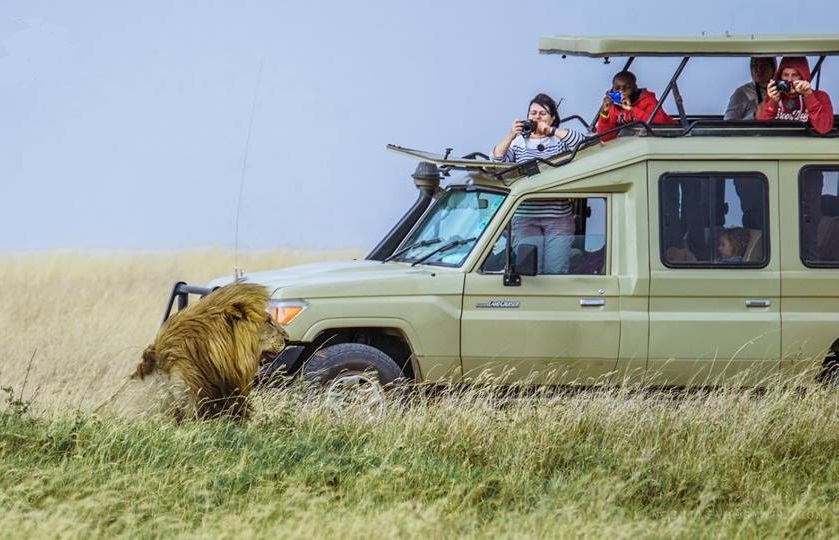
5-Day Tanzania Luxury Safari
A relaxed pace visiting Lake Manyara, Serengeti (2 nights), and Ngorongoro. Premium accommodations and exclusive experiences.
Ready to start planning your adventure?
2-Day Tanzania Lodge Safari
Free cancellation: 30 Days