Overview
The 8-day Lemosho is, by most measures, the best route on Kilimanjaro. It carries the highest summit success rate of any standard line - around 95 percent - it is the most scenic, and for the first three days it is also the quietest. From the western Lemosho Gate you walk across the full Shira Plateau, one of the highest plateaus on Earth, and join the Machame route at Barranco only on Day 5. Eight days, roughly 70 kilometres, sleeping in tents the whole way.
Make no mistake about the difficulty. Lemosho is eight kilometres longer than Machame and that extra distance falls on your energy reserves - we recommend fourteen weeks of training before you arrive. The summit night is identical to Machame's: midnight start, -10C to -20C wind chill, seven-plus hours of climbing, roughly 1,300 vertical metres of loose scree. The acclimatization profile is the gentlest of any standard route, yet Day 4's climb-high-sleep-low to the Lava Tower (4,640m, then down to 3,960m) still triggers mild headaches. The Barranco Wall on Day 5 is the same 270-metre hand-and-foot scramble as on Machame. The non-summit rate sits at roughly 5 percent, almost entirely AMS.
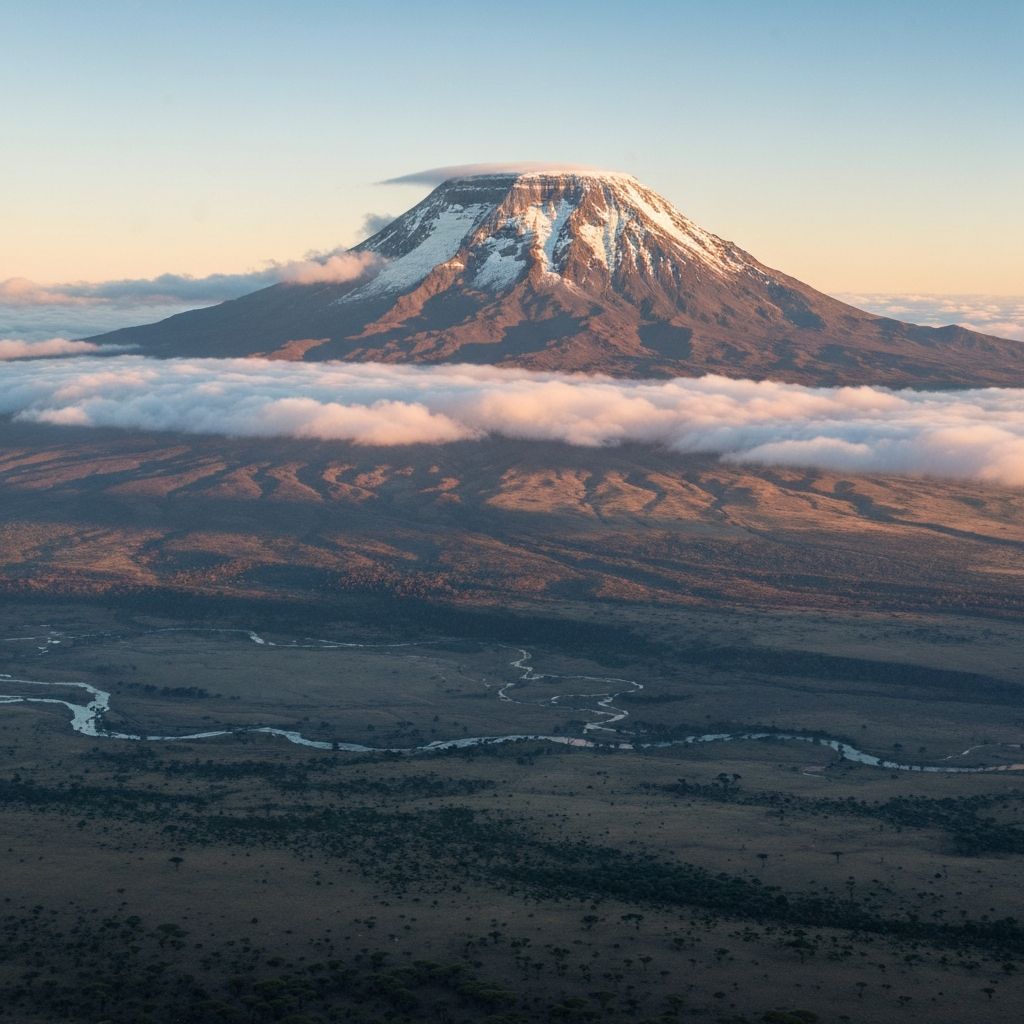
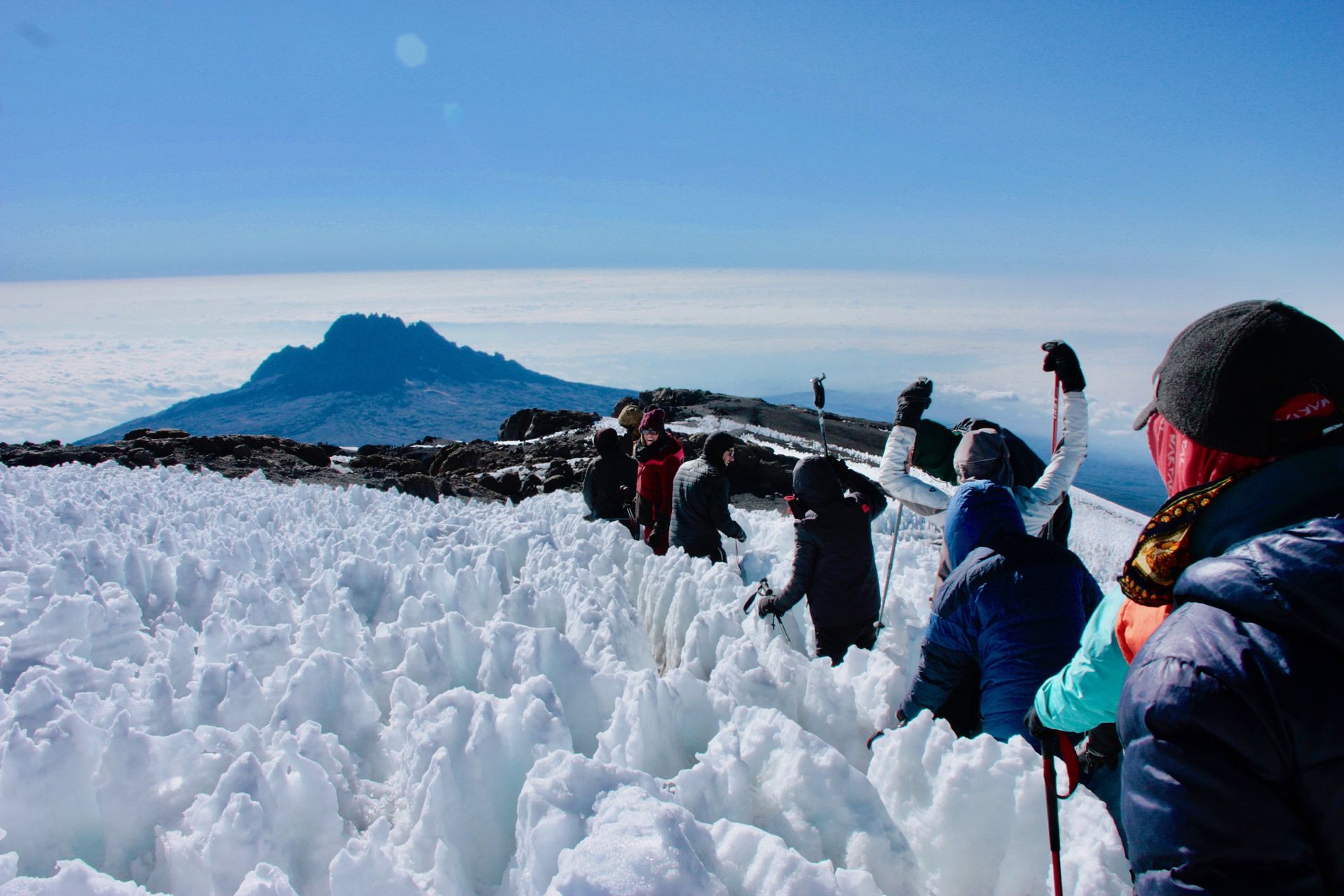
You are guaranteed Mti Mkubwa - 'Big Tree' Camp - on Day 1, set beside an ancient Podocarpus draped in old man's beard moss. You'll spend three full days walking the Shira Plateau with Kibo growing on your right shoulder, including the unforgettable moment on Day 2 when its summit cone first lifts above the heath. You'll move through all five climate zones - rainforest, heath and moorland, alpine moorland, alpine desert, arctic - past the Kissing Rock and through the Karanga Valley to Stella Point at 5,756m and Uhuru Peak at 5,895m, with the receding Northern Icefields and the Furtwangler Glacier in plain sight.
If you're lucky, klipspringers will appear on the Shira rocks, and the quieter forest sections occasionally turn up an eland or fresh buffalo tracks. Lammergeier vultures sometimes ride thermals above the summit ridge. From Karanga Camp the moon can rise behind Mawenzi in just the right weather window. And on a few summit mornings - rare but real - the sun appears refracted through the ice crystals on the glacier rim, a brief 'diamond' on the eastern horizon.
This is the version of Kilimanjaro on which trekkers in their fifties, sixties and seventies summit at the same rate as twenty-year-olds. The extra day of acclimatization is the difference between the photo at the sign and the photo from a hospital tent at Barafu. The real payoff isn't the summit alone - it's looking back at Day 7 and realising you walked across an entire mountain on your own legs, slept above 3,800m for four nights, and held 36.5C while the wind tried to take it. You won't celebrate at the gate. You'll celebrate three weeks later, when someone asks if it was worth it and you can't find a short answer.
Make no mistake about the difficulty.
What to Expect
Lemosho is the route we recommend most often to first-time high-altitude trekkers, and there are three reasons why. First, the summit success rate. The 8-day Lemosho variant runs at around 95% - the highest of any standard Kilimanjaro route, comfortably above the 85% of 7-day Machame and a long way above the roughly 65% on a 5-day Marangu. The extra acclimatization day across the Shira Plateau is the single biggest factor. Second, it is the only route on the mountain that crosses the full breadth of the Shira Plateau, a vast open expanse formed by the collapse of an older volcano half a million years ago. The crossing on day three is gentle in grade but spectacular in scale, with Kibo growing on your right for hours. Third, the first three days see remarkably few other trekkers - you can walk for hours on the plateau without crossing another group. From Lava Tower on day four you join the Machame corridor and the busier shared route to the summit, but by then you've had the quietest part of the mountain to yourselves. The trip's emotional arc builds slowly. The first day in the rainforest feels like a gentle warm-up. The moment on day two when you crest a ridge and Kibo first appears in the distance is hard to describe. The pace is meditative - pole pole, slow slow, mandated by your guides and reinforced by altitude. The food is better than you expect: hot porridge and pancakes and eggs for breakfast, sandwiches and soup on the trail, popcorn and ginger tea as appetisers in the late afternoon, and a hot two-course dinner served in a dining tent every night. The porters who pass you carrying 20kg of your gear on their heads will become the strangest and most important relationships of your week. Altitude becomes a slow, heavy fog by Karanga - you walk slower, eat less, sleep poorly. On summit night somewhere between Barafu and Stella Point you will doubt everything you have ever done. And then at Stella, with the sun coming up over Mawenzi, you won't. Our lead guides have summited the mountain 100, 200, sometimes 500 times. They still call her Mama.
Itinerary
A walk through the route, with distances, hike times and where you'll sleep.
Londorossi Gate to Mti Mkubwa (Big Tree) Camp
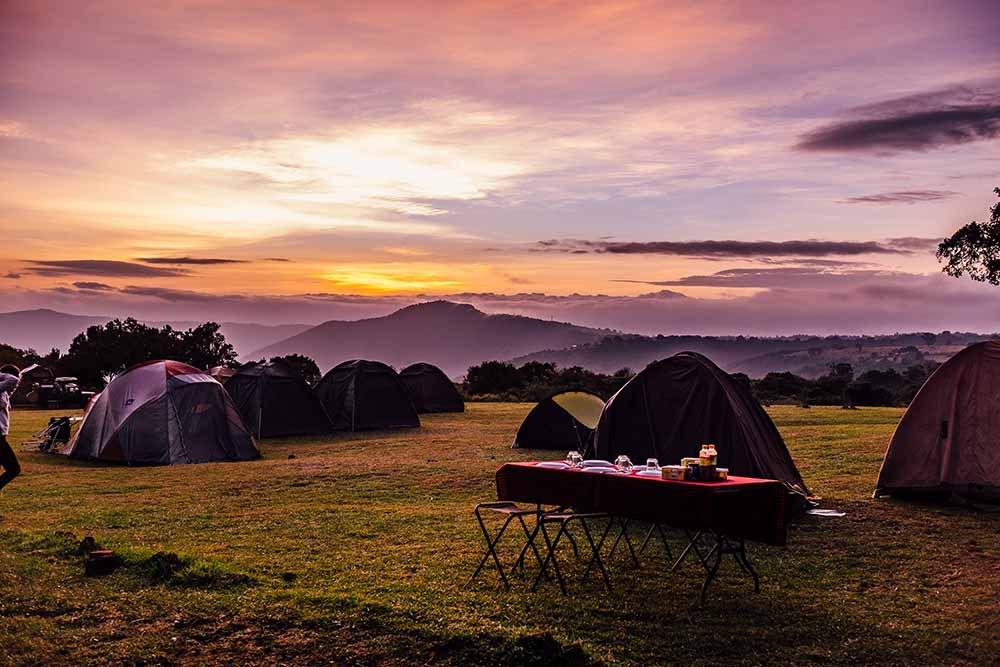
Pickup at your hotel in Moshi or Arusha for the three-hour drive around the western flank of Kilimanjaro to Londorossi Gate at 1,990m. While your guide handles park registration, you'll meet the porters and crew who will travel with you for the next week. From the gate, a 30-minute 4WD shuttle on a rough track takes you to the actual trailhead at Forestry Camp. Day one is intentionally short - under four hours of walking - to ease you into the rhythm of mountain life. The forest here is older and denser than Machame's southern approach: giant junipers and Podocarpus, hagenia trees draped in old man's beard moss, the constant calls of touracos and the bark of colobus monkeys in the upper canopy. The trail is wide and gentle, climbing only 420m. Mti Mkubwa means Big Tree in Swahili - you'll camp beside a massive ancient Podocarpus that has stood here for centuries. The forest dampens sound; the first night feels remarkably quiet, broken only by the distant hyrax bark and the rustle of duikers in the undergrowth.
- Drive through Londorossi Gate at 1,990m
- Lush rainforest with hanging moss and ferns
- First night under the tree canopy
Mti Mkubwa to Shira 1 Camp
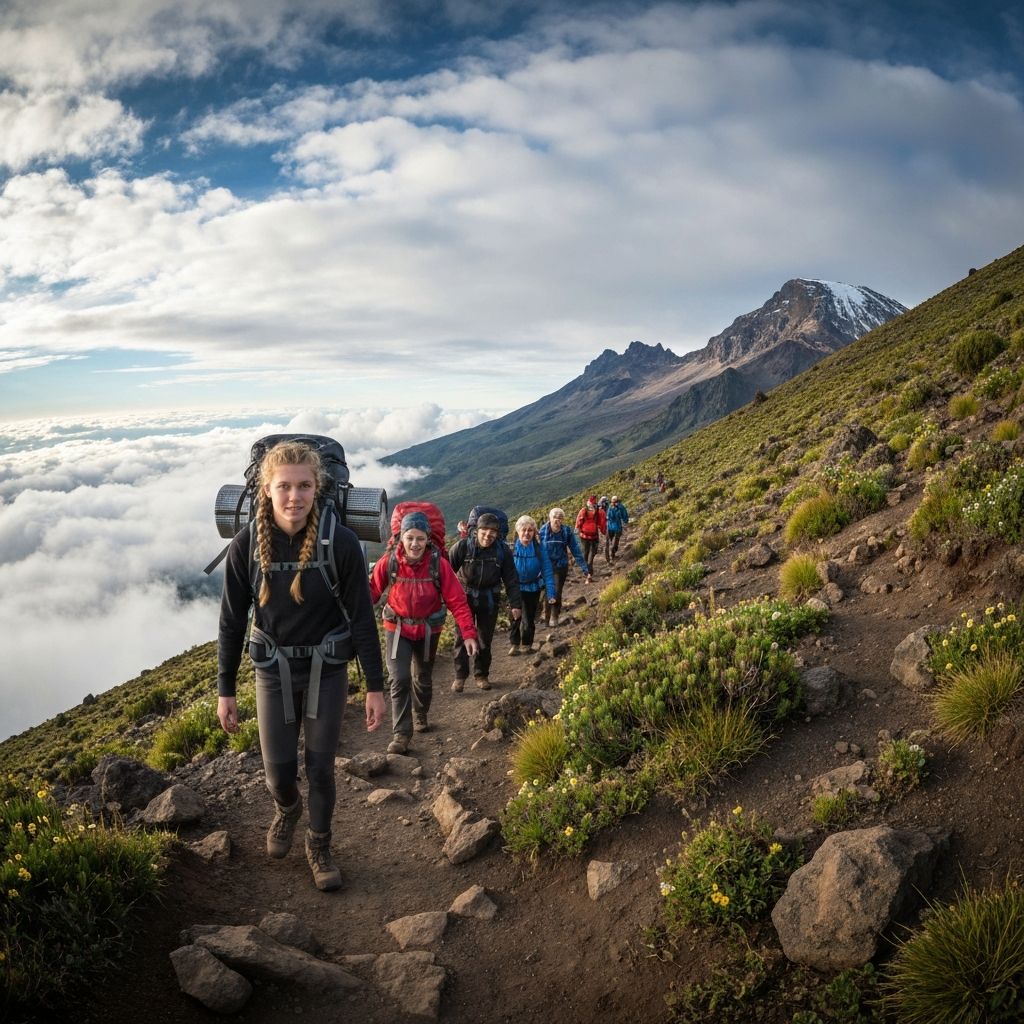
A serious day of climbing - 720m of elevation gain over 8km. The path leaves the rainforest within the first hour and emerges into the heath zone: giant erica heathers up to six metres tall, then onto open moorland with views opening dramatically in every direction. Late morning, you crest a ridge and Kibo's glaciated peak appears for the first time in the distance - it is a moment people remember. By afternoon you're walking across the lower edge of the Shira Plateau, one of the highest plateaus in the world at over 3,500m and the floor of an extinct caldera. Shira 1 Camp sits at 3,504m on the western rim. The temperature drops noticeably as the sun lowers; bring a fleece for the afternoon arrival and a down jacket for after dark. Pole pole - slow slow - becomes mandatory now. Your guides will check on you regularly and run a first pulse oximeter reading at camp. Dinner is hot soup, rice with vegetable stew, fresh fruit, and ginger tea. Lights out early.
- Forest gives way to moorland
- First glimpses of Kibo summit
- Crossing onto the Shira Plateau
Shira 1 to Shira 2 Camp (acclimatization across the plateau)
The acclimatization day that Lemosho is famous for, and the single biggest reason its summit success rate beats every other route. You'll walk across the full breadth of the Shira Plateau - 11km of open, undulating terrain with Kibo always growing on your right. The elevation gain is gentle (340m), but the altitude is significant, and you're now living above 3,500m continuously. This is where Lemosho's extra day pays dividends: your body has time to produce more red blood cells while you're still moving across spectacular terrain, rather than burning energy on a steep climb. The Shira Plateau is what was left when the older Shira Volcano collapsed about 500,000 years ago; geologically it is the oldest part of Kilimanjaro. The going is easy enough that you can look around - keep an eye out for klipspringers (small rock-loving antelope) and the occasional eland on the distant ridges. Shira 2 Camp at 3,845m has one of the great sunset views on the mountain - the western flank glowing orange while Kibo stays brilliant white above. You sleep noticeably better here than you did at Shira 1.
- Crossing the open Shira Plateau in full
- Sweeping panoramic views of Kibo
- Acclimatization day with modest elevation gain
Shira 2 to Lava Tower to Barranco Camp (climb-high-sleep-low)
The pivotal acclimatization day. You'll climb steadily for five hours to Lava Tower at 4,640m for lunch - a stark volcanic plug rising out of alpine desert - then descend over two hours back to Barranco at 3,960m to sleep. Climb high, sleep low. This forces your body to produce more red blood cells without overstaying at altitude. Some trekkers feel mild headaches or queasiness at Lava Tower; this is normal and almost always resolves on the descent. At Lava Tower you join the Machame route, so trekker numbers visibly increase. The alpine desert landscape between Shira 2 and Lava is otherworldly - black volcanic rock, blinding blue sky, no vegetation above knee-height. Lunch at Lava Tower is typically eaten huddled out of the wind behind boulders. The descent into Barranco Valley reveals one of the most beautiful camps on the mountain: a sheltered hanging valley filled with the largest giant senecio forest on Kilimanjaro, with the dramatic 270m Barranco Wall rising on the far side - the wall you'll climb in the morning. Sunset turns the wall orange. You sleep at 3,960m feeling tired but, crucially, better than you did at Lava Tower.
- Acclimatization peak at Lava Tower (4,640m)
- Joining the Machame route
- Spectacular descent into Barranco Valley
Barranco to Karanga (Barranco Wall day)
The day begins by scrambling up the Barranco Wall - a 270m near-vertical face that looks terrifying from the breakfast tent and turns out to be far friendlier than it appears. You'll use your hands in maybe a dozen places (class 2-3 scrambling), but there is no technical climbing, no ropes, and no exposure that would unsettle anyone comfortable on a steep staircase. Most trekkers come down the other side calling it their favourite day. The famous Kissing Rock - a section so tight you press your chest against the cliff and shuffle sideways with the valley dropping below - is the photo every Lemosho trekker brings home. Once on top of the wall, the views back toward Mount Meru on a clear day are extraordinary, and the southern icefields hang directly above you. The rest of the day is a gentler traverse, dipping into and out of two ridges before a final pull up to Karanga Camp at 4,035m. Karanga is more sheltered than Barafu, which is why we sleep here rather than pushing higher - splitting the day matters for the body.
- Scrambling the iconic Barranco Wall
- The famous 'Kissing Rock'
- Karanga Valley crossing
Karanga to Barafu (approach base camp)
A short, deliberately easy day so you arrive at base camp early and can rest. The landscape is now stark - alpine desert giving way to bare rock and gravel, no vegetation beyond a few clinging tufts of everlasting. Barafu means ice in Swahili, and the name fits. The camp sits on an exposed shoulder at 4,640m with views down into Karanga Valley and the summit dome looming directly above. The wind here is honest. After a hot lunch, your guide will run a final equipment check - headlamp batteries, summit layers, water bottles wrapped against freezing, snacks accessible without removing gloves. Pulse oximeter readings get logged. An early dinner around 5pm, lights out by 7pm. You will not really sleep - the altitude, the cold, the anticipation will all conspire against you. That is fine and expected. Around 11pm a porter will unzip your tent and hand you hot tea and a biscuit. The summit attempt begins at midnight.
- Final approach to base camp
- Equipment check with your guide
- Early dinner and rest before the midnight start
Summit Day: Barafu to Uhuru Peak to Mweka
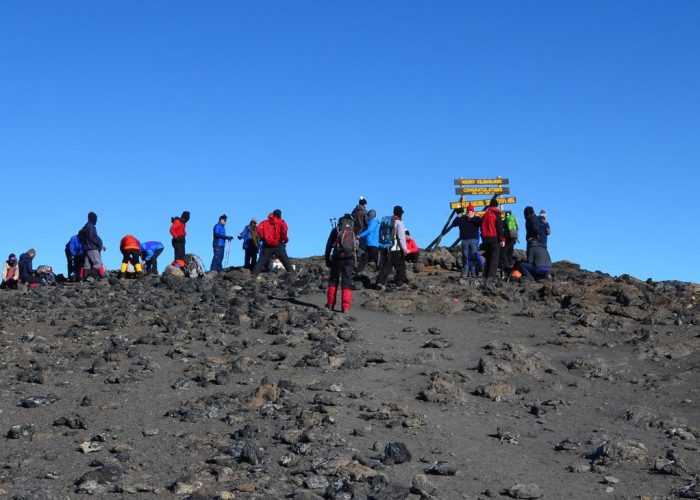
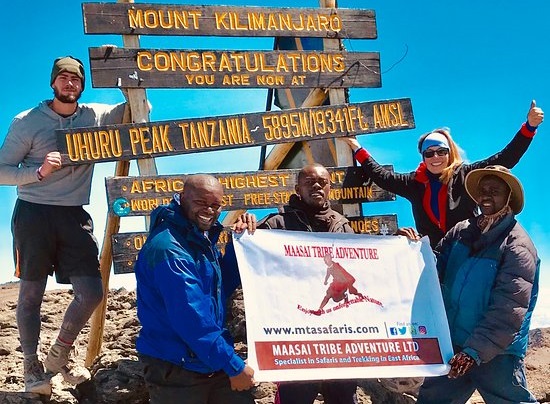
The hardest and most rewarding day of your trip, almost certainly. You leave Barafu at midnight under a sky thick enough with stars to read by, single-file, head-torches making a slow chain of yellow dots up the scree. Temperatures are typically -10C to -20C with the wind chill making it feel closer to -25C. The climb up to Stella Point on the crater rim at 5,756m takes most trekkers five to seven hours and follows endless zig-zags up loose volcanic scree - one step, half a step back, repeat ten thousand times. This is where the mountain is genuinely hard. The cold, the thin air, the dark, the monotony, and the slow grinding climb combine into something most people have never asked of themselves. Most trekkers cry, or want to. Cresting Stella Point as the sun rises over Mawenzi's jagged silhouette is one of the most emotional moments of any traveler's life. From Stella, it is another 45 to 60 minutes along the gently rising crater rim to Uhuru Peak - 5,895m, the highest point in Africa, the iconic green sign, the receding glaciers right beside you, the curve of the earth on the horizon. Time at the summit is brief by necessity - 15 to 30 minutes for photos and hugs, then your guide turns you around. The cold is severe and lingering is dangerous. The descent back to Barafu (where you collect the rest of your gear) and continuing down to Mweka Camp at 3,080m is exhausting in a different way - your legs are jelly from the night's effort, and the loose scree above Barafu is hard on the knees. Total time on your feet: 12 to 14 hours. You will fall asleep in your tent at Mweka before your boots are properly off.
- Stella Point on the crater rim at sunrise
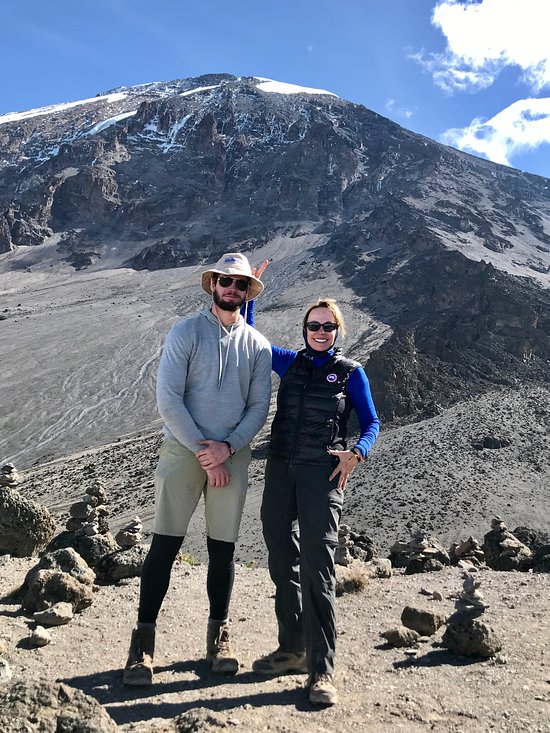
- Uhuru Peak - the Roof of Africa at 5,895m
- Glacier views before the long descent
Mweka to Mweka Gate to Arusha
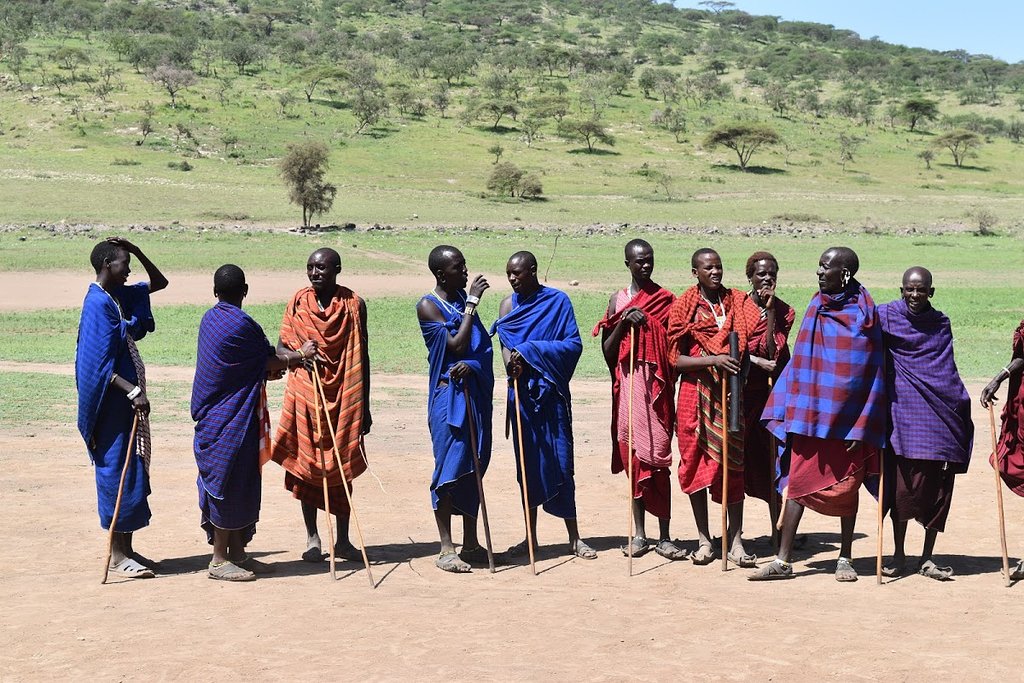
A bittersweet final morning. The trail drops back through misty rainforest - the same ecosystem you started in seven days ago at Mti Mkubwa, only now the meaning has changed. The same trees, the same moss, the same monkeys, but you are not the same person who walked up. The descent is gentle in grade but steady in distance: 1,440m of downhill over about 10km, slippery in places, and hard on knees that already filed their complaints yesterday. Somewhere on the way down the porters will gather around you and sing the Kilimanjaro song - Jambo, jambo bwana, habari gani, mzuri sana - and you will not know what to do with your face. At Mweka Gate (1,640m) you sign out of the park and receive your certificates: gold for Uhuru Peak, green for Stella Point. A vehicle is waiting; the drive back to Arusha takes two to three hours. Most travelers go straight to a 30-minute shower and order a steak and a cold beer.
- Final descent through rainforest
- Summit certificate at the gate
- Celebratory meal back in Arusha
Elevation Profile
What you'll see
Sighting probability across all parks visited.
Blue monkey
Likely
Black-and-white colobus monkey
Likely
Bushbuck
Possible
Four-striped grass mouse
Common
Mt. Kilimanjaro tree hyrax (heard at night)
Possible
Lammergeier (bearded vulture)
Possible
White-necked raven
Common
What a typical day looks like
- 06:30
Wake-up tea brought to your tent
- 07:00
Breakfast: pancakes, eggs, porridge, fruit, hot drinks
- 08:00
Break camp, set off pole pole
- 12:30
Hot lunch stop: sandwiches, soup, fruit
- 15:00
Arrive at next camp (varies by day)
- 16:00
Popcorn, peanuts, ginger tea in the mess tent
- 18:30
Dinner: rice/pasta/potatoes with stew, soup starter, hot drinks
- 20:00
Briefing for tomorrow, lights out
Fitness & Acclimatization
Fitness Required
Lemosho is challenging but, paradoxically, often easier than the 7-day Machame for less experienced trekkers - the extra day means a more gradual altitude profile, which is the part that actually breaks most people. The trade-off is total distance: at around 70km, Lemosho is the longest of the standard routes, so cardiovascular endurance over many days matters more than peak intensity. The baseline: you should be comfortable walking six to eight hours per day with a 5kg daypack, day after day, over a week. You do not need to be an athlete. We recommend a 14-week preparation programme: three or four cardio sessions per week (hiking, running, stair-climbing, cycling), two strength sessions focused on legs, glutes and core, and a long weighted hike every weekend - start with 5km carrying 3kg and build to 20km carrying 6kg over six to seven hours. If you live near hills, use them religiously; if you do not, the Stairmaster is your new friend. A useful real-world test: if you can hike a 15-mile day with 3,000 feet of gain at sea level and feel decent the next morning, you have what Lemosho needs. The cardio bar is moderate - patience and consistency over power. Altitude is the wildcard. No amount of sea-level training fully predicts how you will respond above 4,000m, and genetics play a role we cannot test for in advance. But Lemosho's gentle profile gives more people a fair chance to acclimatize than any other route.
Acclimatization Strategy
Lemosho's acclimatization profile is the gold standard of the mountain. Eight total days is the longest standard itinerary, and the route uses four specific techniques in combination. First: a long, gradual ascent. The first three days cover only 1,300m of vertical gain over 25km, giving your body time to adapt before things get serious. Second: a dedicated acclimatization day. Day three (Shira 1 to Shira 2) gains only 340m but covers 11km horizontally at altitude, letting you live above 3,500m without forcing more vertical. Third: climb-high-sleep-low on day four. From Shira 2 at 3,845m you climb to Lava Tower at 4,640m for lunch, then descend to sleep at Barranco at 3,960m - kickstarting the red blood cell response without sleeping at altitude before you're ready. Fourth: the Barranco-Karanga split on days five and six rather than pushing straight to Barafu. By summit night you've spent four nights above 3,800m, which makes a measurable difference - data from the Kilimanjaro Porters Assistance Project shows 8-day Lemosho consistently outperforms 7-day variants by 10-15 percentage points. Most acute mountain sickness happens to people who jump straight to 4,500m+ without time to adapt. Symptoms to watch for: mild headache, mild nausea, sleeplessness and shortness of breath are all normal and expected above 3,000m. Severe headache that does not respond to ibuprofen, persistent vomiting, confusion, loss of coordination, ataxia (drunken-looking walk), or a wet cough are emergency symptoms that mean immediate descent. All our guides carry pulse oximeters and check every trekker twice daily; readings get logged. We carry emergency oxygen, a Gamow bag (portable hyperbaric chamber), and have evacuation protocols rehearsed. We will turn anyone around who is unsafe - the summit is always optional, getting down alive is not.
What's Included
- Park & rescue fees
- Mountain guides
- Cooks
- Porters
- Tented accommodation on the mountain
- All meals on the mountain
- Airport & hotel transfers
- Filtered drinking water
Not Included
- International flights
- Tanzania visa
- Tips for guides, cooks and porters
- Personal trekking gear (rental available)
- Alcoholic & soft drinks
- Travel & medical insurance
Before you go
FAQ
What makes Lemosho different from Machame?
What's the summit success rate?
Do I need to use Diamox?
How crowded is Lemosho?
How cold is it on summit night?
Can I rent gear in Tanzania?
What if I can't summit?
How much should I tip the crew?
You might also like
Kilimanjaro - Marangu Route (5 Days)
The 'Coca-Cola Route' - the oldest and most well-established route. The only route with hut accommodation (dormitory style) rather than tents. The shortest route to the summit.
Kilimanjaro - Machame Route (7 Days)
The 'Whiskey Route' - a popular, scenic route known for better acclimatization ('climb high, sleep low'). Accommodation is in tents. Approaches from the southwest.
Kilimanjaro - Rongai Route (6 Days)
Approaches from the North (near Kenyan border). It is drier and less crowded. The descent follows the Marangu route.
7-Day The Great Migration Safari
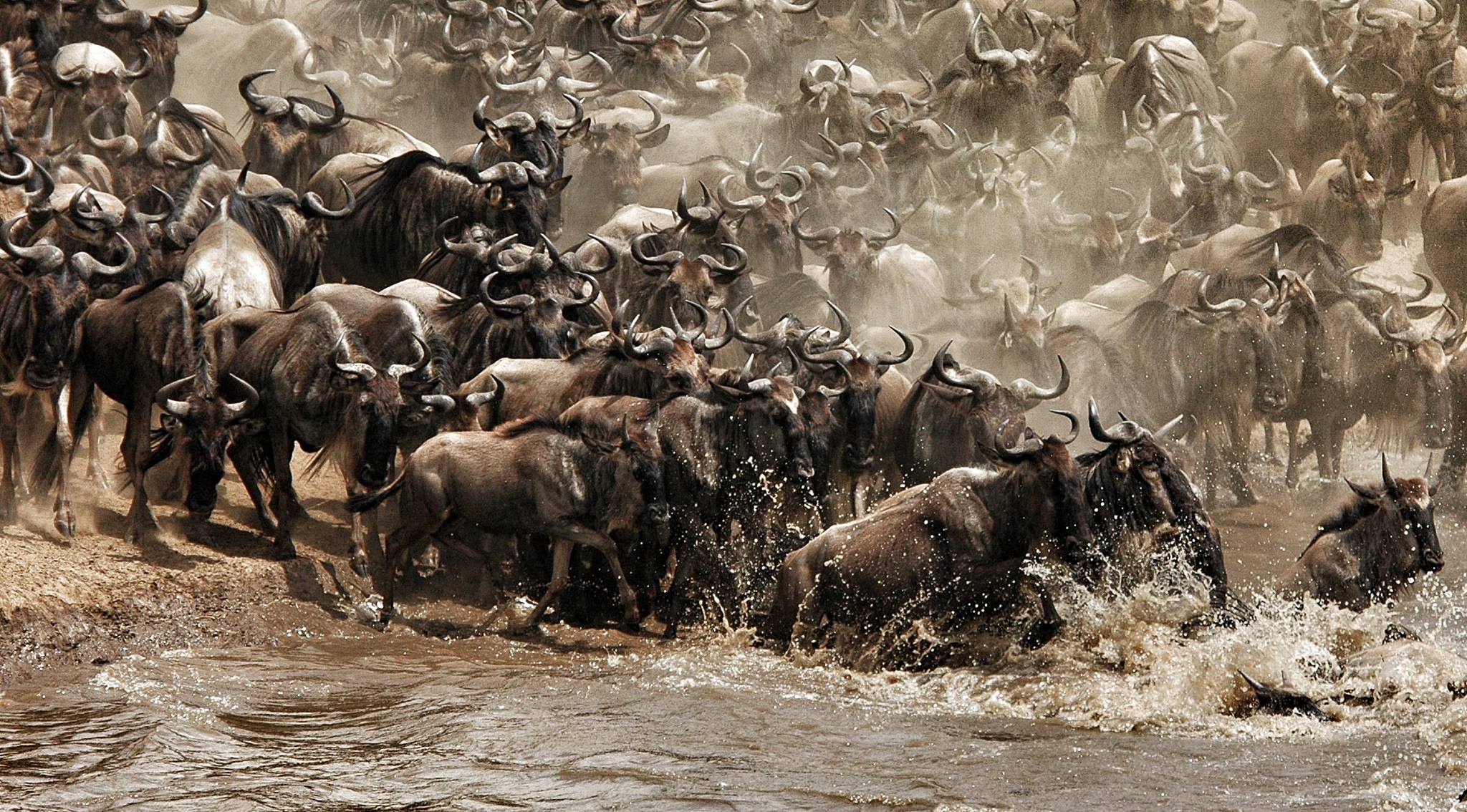
Designed to follow the wildebeest migration (location varies by season: North/Kogatende, South/Ndutu, or West). Flies out of Serengeti on the last day.
Ready to start planning your adventure?
Kilimanjaro - Lemosho Route (8 Days)
Free cancellation: 60 Days