
Overview
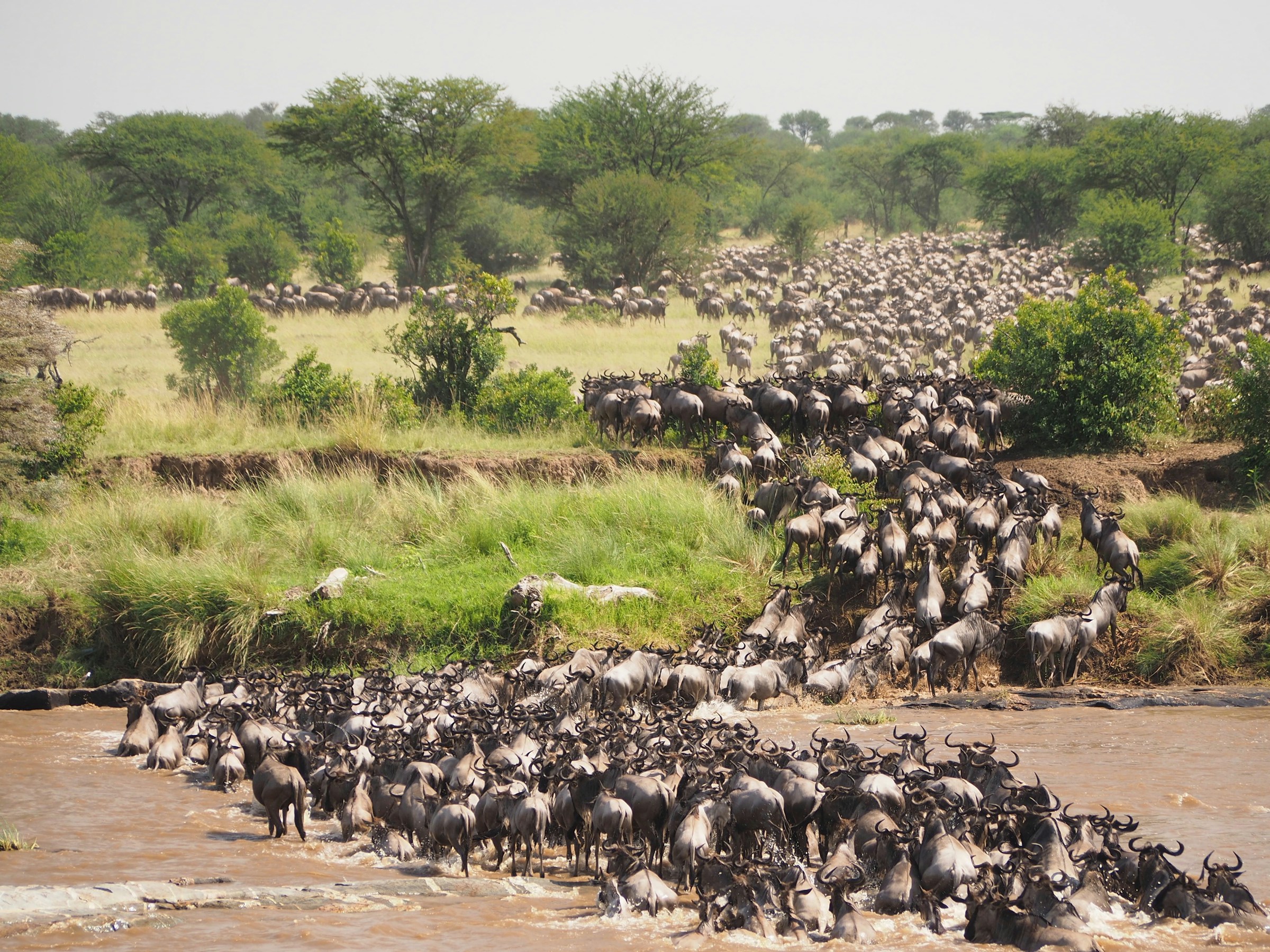
The 7-Day Great Migration Safari is our marquee product, designed for travelers who don't just want to see the Serengeti - they want to find the herd. The 1.5 million wildebeest of the Serengeti-Mara migration never stop moving. They calve in February in the southern short-grass plains of Ndutu, drift northwest through April and May, push north into the Western Corridor in June, cross the Grumeti and Mara rivers from July through October, then loop back south as the rains return. There is no single 'migration spot' - there is wherever the herds are this week. Our seven-day itinerary follows them. Your route is locked in two months before departure based on the latest mobile reports from our network of camps and pilots, and we position you at the right end of the Serengeti when you arrive.
The trip is physically easy but logistically ambitious. You'll cover Lake Manyara, Ngorongoro Crater, and central Serengeti in the first four days - a classic northern circuit - then drive (or sometimes fly) up to 4 hours to the active migration zone for the final two and a half days of focused herd-tracking. The Day 7 flight from a Serengeti airstrip back to Arusha saves you the eight-hour drive that otherwise eats a full day at the end.
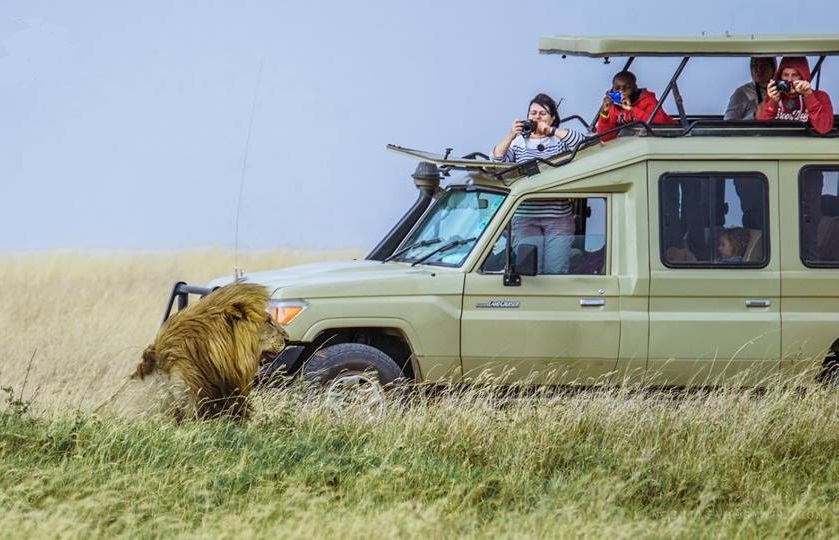
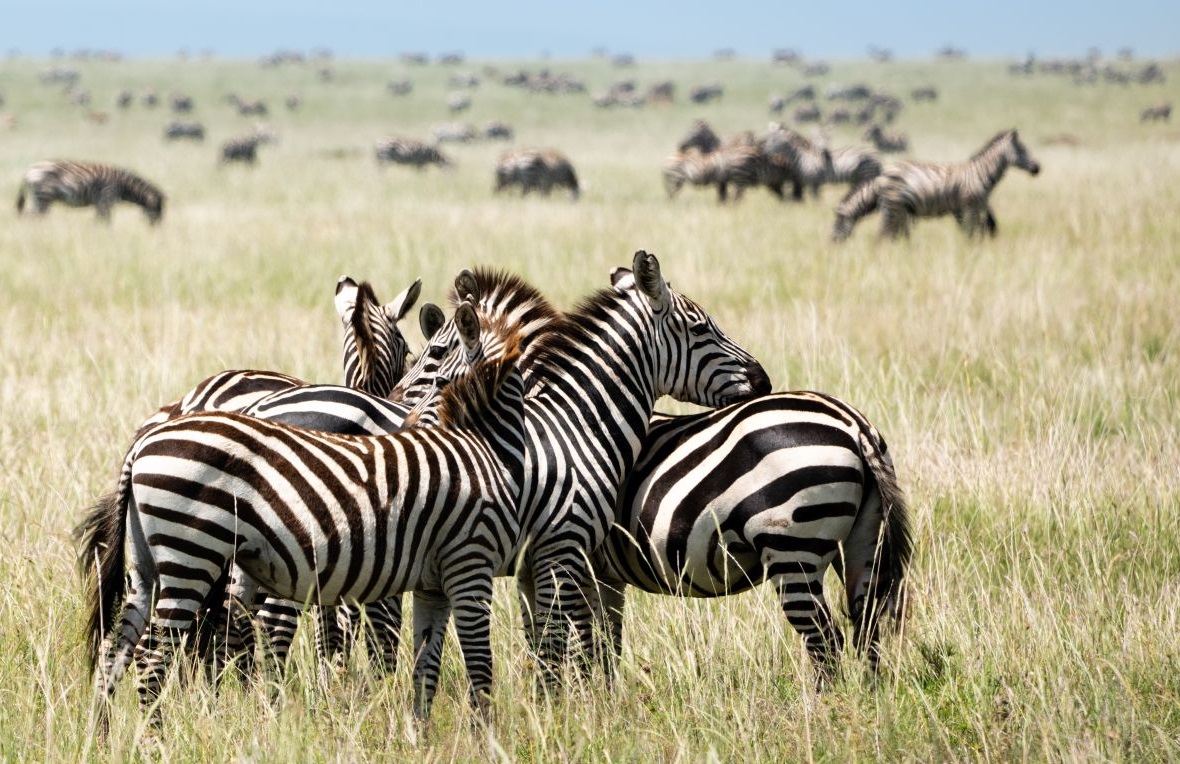
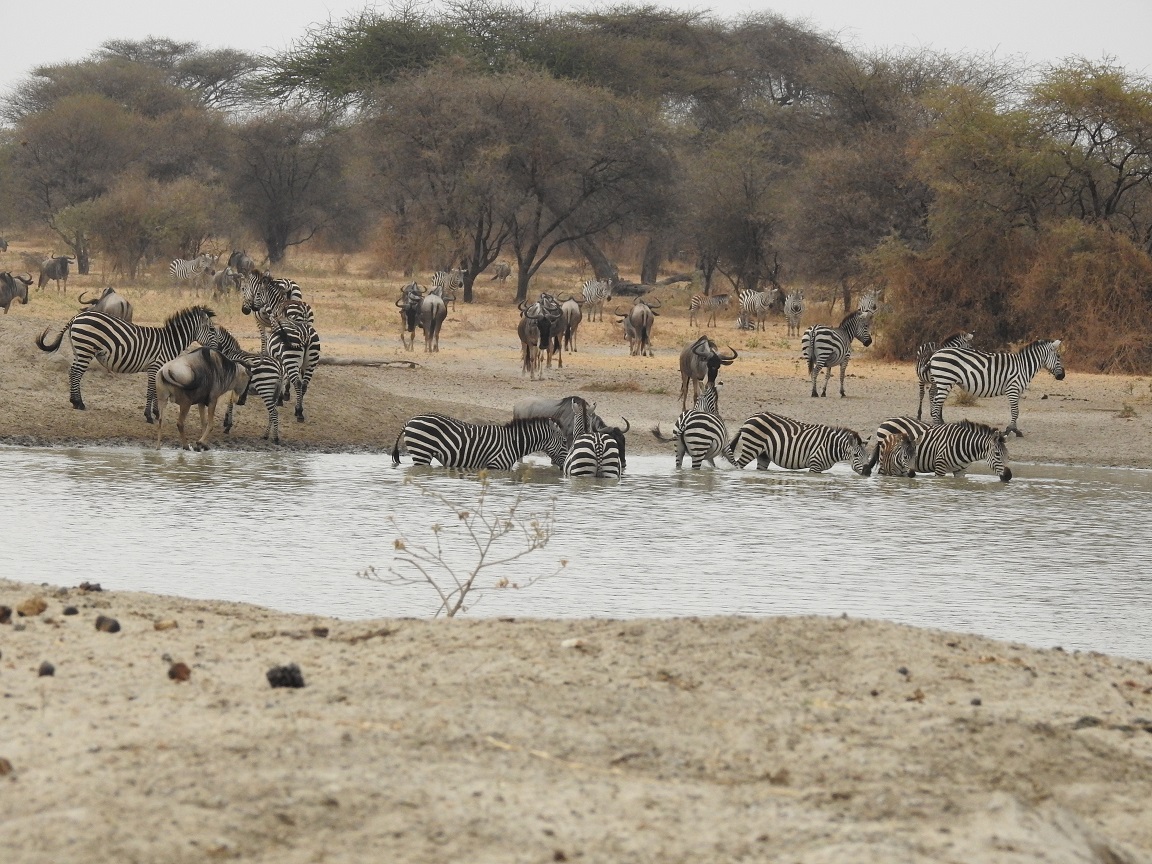
Guaranteed sightings, in addition to the standard cast: hundreds of thousands of blue wildebeest at the migration zone (not an exaggeration - the calving aggregation alone is 8,000 newborns per day at peak), plains zebra in the same numbers (they migrate with the wildebeest), Cape buffalo herds, hippo, elephant, Maasai giraffe, the antelope cast. Lion is 98 percent on this itinerary - the Seronera prides plus the migration's predator wake. Spotted hyena is 90 percent.
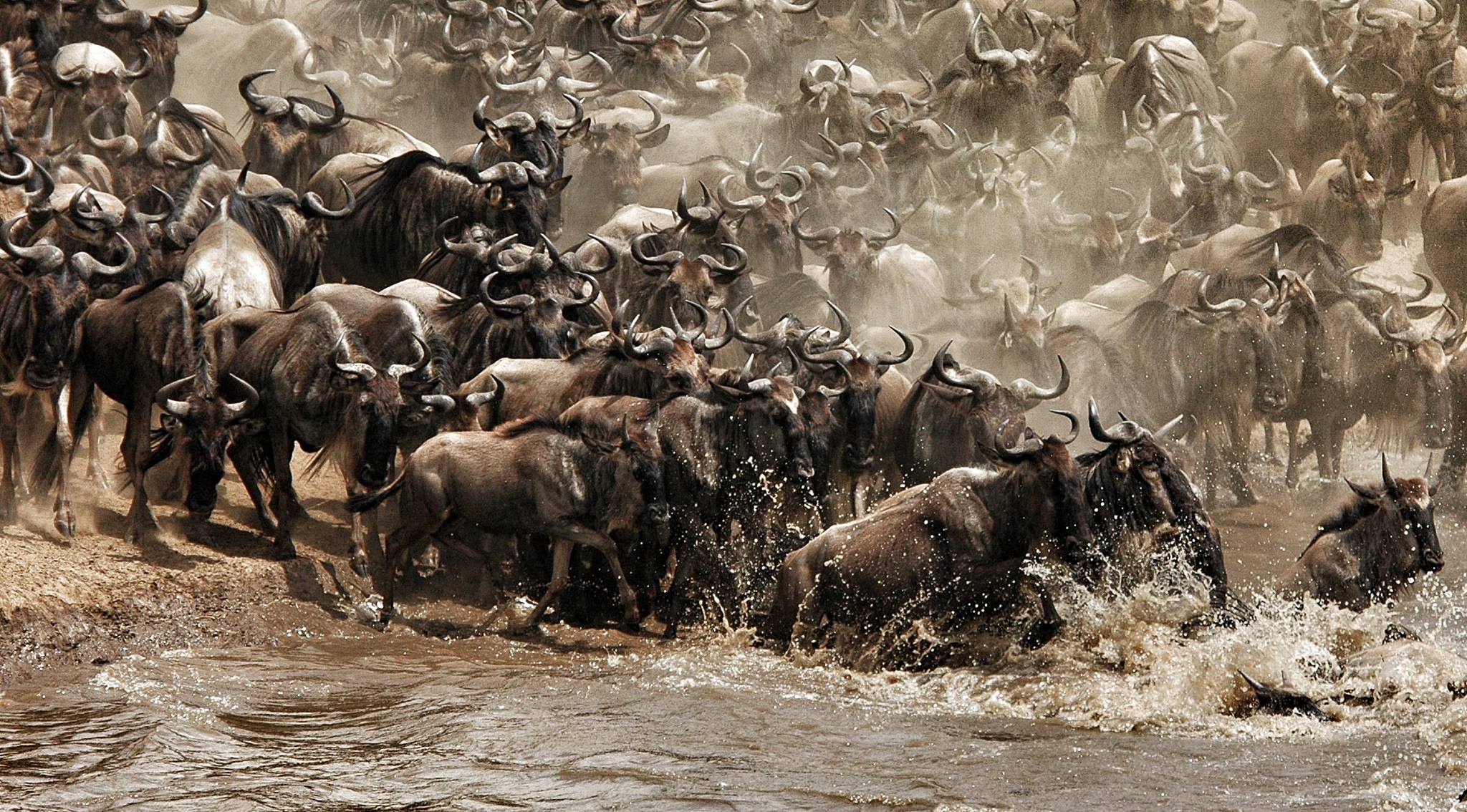
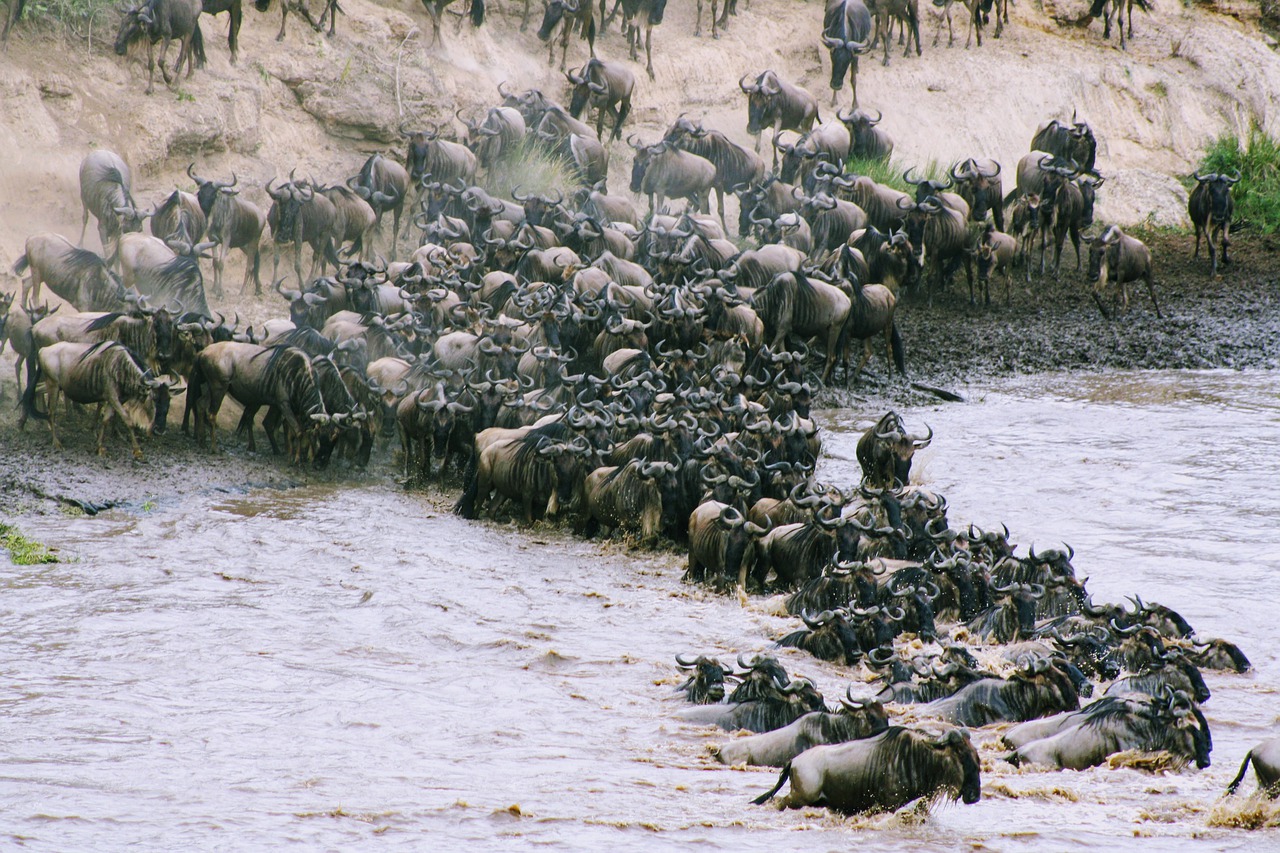
Wild cards: leopard rises to 65 percent because of the two Seronera mornings; cheetah is 70 percent because the Serengeti is genuinely the best place on earth to find them - open ground, abundant gazelle, low brush. Black rhino in Ngorongoro is 50 percent. River crossings at Mara and Sand rivers are July-October only and remain genuinely unpredictable - you can sit watching a thousand wildebeest mass at a crossing point for six hours and they will not jump until the moment they do. Calving in Ndutu is February-March and you can sit beside a nervous wildebeest cow as she drops her calf onto wet grass; the calf is on its feet in seven minutes. African wild dog is the once-a-decade gift.
The payoff: the migration is the largest mammalian movement on the planet. Standing in the open roof of the Land Cruiser at the lip of the Mara River as a thousand wildebeest jump into the water in a single twenty-minute panic, or sitting at dawn at Ndutu while two hundred mothers shield two hundred newborns from a circling spotted hyena - these are not safari moments. They are weather-system moments. You will be quiet on the flight home.
The trip is physically easy but logistically ambitious.
What to Expect
Your trip is timed around where the herds are. Late January in Ndutu means 8,000 newborn wildebeest calves per day and the predators that follow them. Late August in Kogatende means muddy river crossings and crocodile ambushes. June means the Western Corridor and the more reliable but smaller Grumeti crossings. There is no 'wrong time' to do the migration, only different chapters of the same story.
The rhythm of the seven days is shaped like a wedge. The first half is the classic northern circuit - Lake Manyara, Ngorongoro, central Serengeti - and gives you the foundation game-drives, the lion sightings, the leopard chances, the crater rhinos. The second half is migration-specific: a longer transit drive to the active zone (which can mean 3-4 hours of dust depending on where the herds are), then 36-48 hours of intensive herd-tracking. You will hear the herd before you see it - a low oceanic rumble that turns out to be 100,000 hooves on dry grass.
The camps in the migration zone are different from the Day 1-4 lodges. Out at the migration, you stay at mobile tented camps - canvas suites with proper beds, en-suite bucket showers, oil-lamp lighting, and dining under canvas. Serengeti Under Canvas and Serengeti Migration Camp are the references. These camps move three or four times a year to stay near the herds. You are sleeping at the migration, not just visiting it. The lions roar around your tent. The Maasai night-watch walks you to the bathroom after dark. Hyenas pass within ten metres.
The Day 7 flight is the trip's logistical lynchpin. Your guide drops you at the Serengeti airstrip (Kogatende, Seronera, Ndutu, or Kusini depending on where you ended up) for the 10am Coastal Aviation Caravan to Arusha. One hour in the air versus eight on the road. You can connect to a Zanzibar departure same-day if you want to bolt on a beach extension.
Weather: the Ngorongoro rim is cold at night (under 10C in dry season). The Serengeti is 25-30C by day, 12-15C at night. Migration zones in the wet calving season (Jan-Mar) are showery and lush; in the dry crossing season (Jul-Oct), they are dusty and golden. Bring layers for both.
Driving: roughly 200km Day 1, 150km Day 2, 250km Day 3, 150km Day 4, 220km Day 5 (transit to migration), 130km Day 6, 100km Day 7. Total of about 1,200km on the ground. Then a one-hour flight home.
Your trip is timed around where the herds are.
Itinerary
A walk through the route, with distances, hike times and where you'll sleep.
Arusha to Lake Manyara
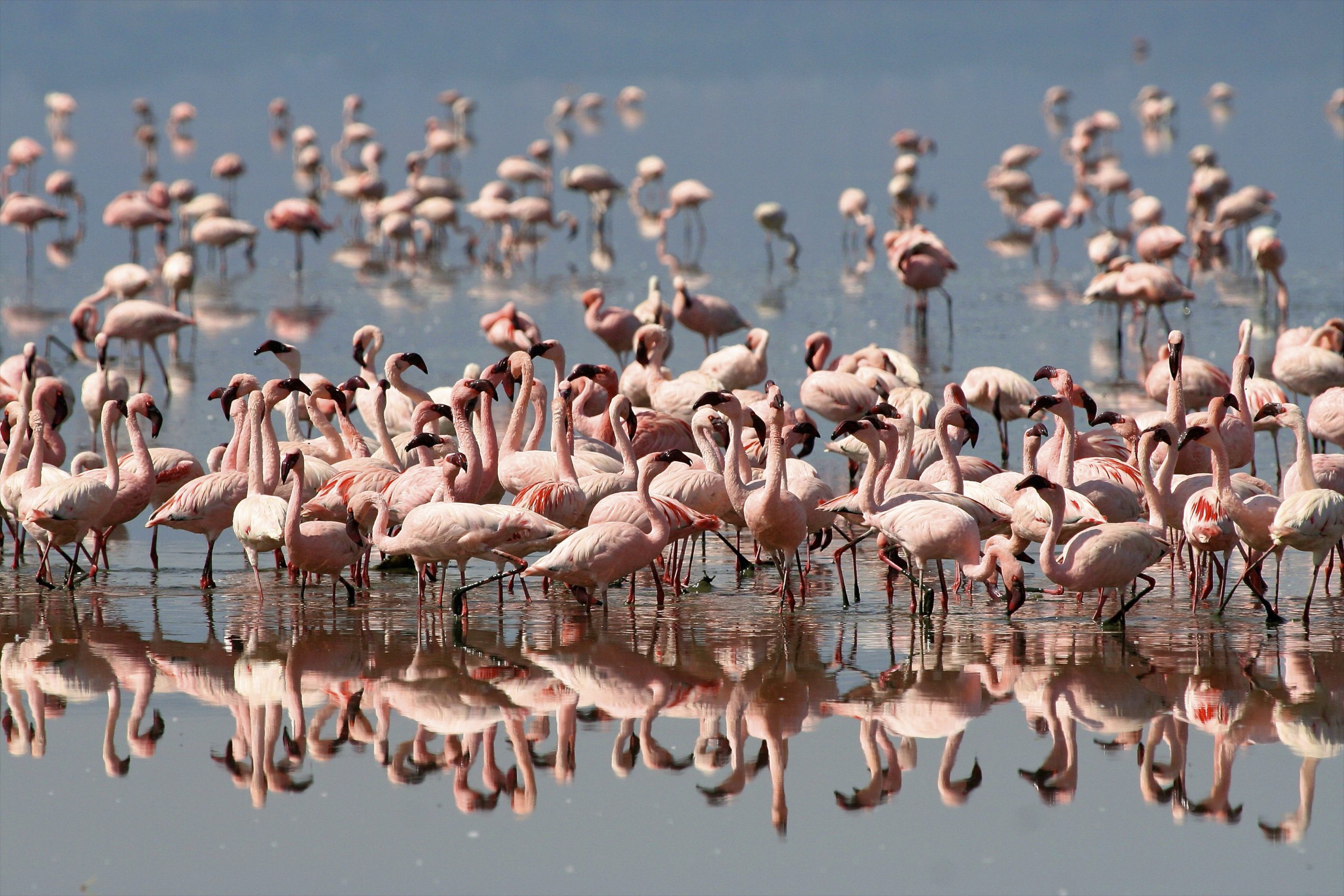
Pickup from your Arusha hotel at 8:00 after breakfast and the trip briefing. The 130km transfer west to Lake Manyara takes about two hours, dropping down the dramatic Great Rift Valley escarpment to lunch at your highland lodge above the park. Afternoon game drive in Lake Manyara, the smallest park on the circuit but ecologically improbable - groundwater forest, acacia woodland, then the alkaline soda lake itself, all crammed between the 600m Rift wall and the lake shore. You enter under fig trees alive with olive baboons and blue monkeys. The forest produces elephant, bushbuck, Cape buffalo. The lake flats deliver the bird life - great white pelican, marabou stork, fish eagle, and in November-April the flamingo flotillas. The famous tree-climbing lions are real but uncommon. Back at the lodge by 6:00 for sundowner overlooking the Rift Valley, dinner at 7:30, and an early night - the seven-day rhythm starts properly tomorrow.
- Rift Valley escarpment descent
- Flamingos and 400+ bird species
- First elephant sighting
Ngorongoro Crater
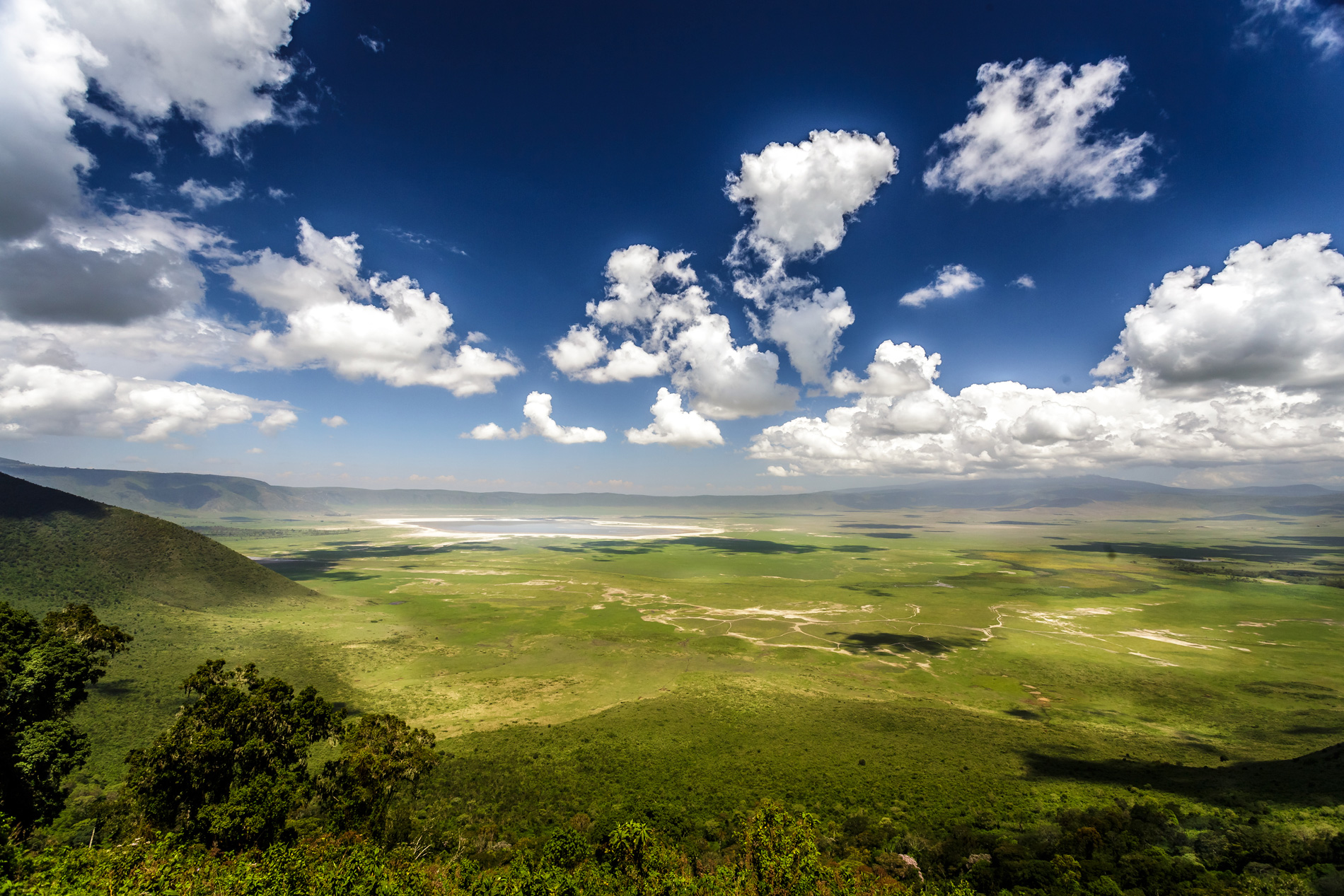
An early start - 5:30 wake-up, breakfast at 6:00, on the road by 6:30 to be at the crater descent road by 7:30 with the cool light. The Ngorongoro Crater is hour-for-hour the highest concentration of large mammals on earth - 25,000 in 260 square kilometres - and a full day on the floor gives you better than even odds of all Big Five from the one vehicle: lion (close to certain), elephant (very likely as resident old bulls in the fever-tree forest), Cape buffalo, leopard (15-20 percent), and black rhino (35-50 percent depending on season and luck). Hippo, hyena, jackal, serval, and the antelope cast complete the morning. Picnic lunch at the hippo-pool site (mind the kites). Ascent up the steep crater road at 2:30, then a 30-minute transfer to your lodge at the crater rim. Sundowner at 6:00 looking down into the caldera you just left, dinner at 7:30, fire in the suite. The rim is cold tonight.
- Dawn descent into the caldera
- Best chance of all Big Five in one day
- Black rhino possible
Ngorongoro to Central Serengeti
Breakfast at 7:00 and on the road by 8:00 for the long transfer west into the Serengeti. The road crosses the Mbulu highlands and then descends onto the southeastern plains - one of the most affecting transitions in African travel as the grasslands open and the horizon flattens. Lunch at Naabi Hill Gate and formal Serengeti entry, then an afternoon game drive route through the central plains towards your lodge near Seronera. By 4:00 you're in cat country with kopjes every few kilometres. First Serengeti lion sighting is highly likely before reaching the lodge. Sundowner at 6:30, dinner at 7:30, lodge bed - the proper Serengeti days start tomorrow.
- Crossing into the Serengeti plains
- First Serengeti lion
- Kopje landscapes
Central Serengeti - Seronera
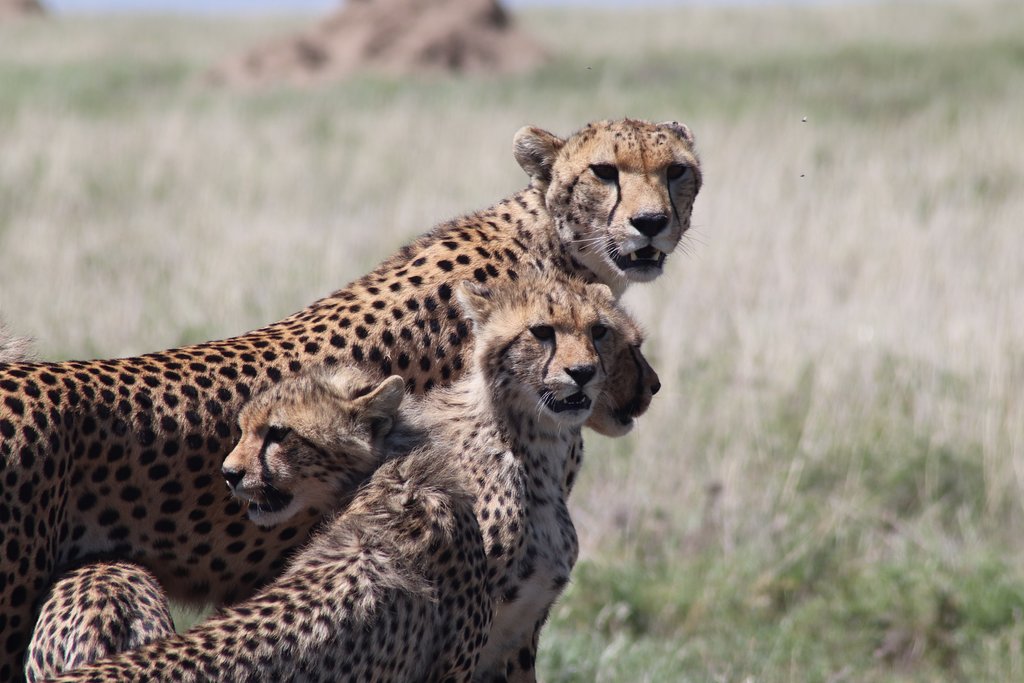
A full day in the Seronera river valley - the densest concentration of large cats in Africa. Coffee at 6:00, in the Land Cruiser at 6:30 for the cool morning hunt window. Lion prides of fifteen and twenty are routine, leopards drape themselves in the sausage trees, and the open grasslands east of Seronera are prime cheetah ground. Your guide knows which trees a particular leopard has been favouring lately. Midday retreat to shade and you switch focus to hippo pools, the river bird life, the elephant herds at the Maasai kopjes. Picnic lunch under a shade tree. Optional siesta from 1-3, afternoon drive 4-6:30. Sundowner at a kopje viewpoint at 18:30, dinner under the stars at 8:00.
- Highest big-cat density in Africa
- Leopards in the sausage trees
- Cheetah on the short-grass plains
Transfer to the Migration Zone
The day shifts gears. Breakfast at 6:30, on the road by 7:30 for the transfer to wherever the migration currently is. North (Kogatende/Mara River) for July-October river crossings - the most cinematic but most demanding because the herds are spread across the Kenya-Tanzania border and the dust is at its worst. South (Ndutu) for December-March calving aggregations - the gentlest country, the youngest animals, the highest predator density. West (Western Corridor/Grumeti) for May-June - the Grumeti crossings are smaller than Mara crossings but more concentrated, and the country is greener. The drive is 3-4 hours of game-driving en route, including stops at any spectacle the guides find on the radio. Arrive at the mobile tented camp by mid-afternoon, settle in, then an evening game drive into the herds for the first time. Dinner under canvas, lions roaring in the distance as you fall asleep.
- First contact with the migration
- Mobile tented camp arrival
- Hundreds of thousands of wildebeest
Full Day with the Migration
The day the trip is built for. The migration is not a one-photo phenomenon - it is a continuous, evolving spectacle of mass animal movement, predator opportunism, and natural drama. In July-October, you spend the day positioned along the Mara or Sand rivers waiting for crossings. Crossings are genuinely unpredictable; you can wait three hours watching a thousand wildebeest mass at a riverbank and then have it all happen in twenty minutes. Crocodiles wait in the water. Hyenas pace the far bank. In Feb-March in Ndutu, you sit beside the calving aggregations - thousands of newly-born wildebeest, mothers nervously shielding them from circling cheetahs and hyenas. In the Western Corridor (May-June), the smaller Grumeti crossings happen with no real warning. Lunch is wherever you are. Sundowner setup back near the camp at 18:30. Dinner under canvas. The Maasai night-watch walks you back to your tent.
- River crossings (July-October only)
- Calving aggregation (February-March only in Ndutu)
- Predator activity around the herd
Morning Game Drive and Fly Out
A final morning with the herd - 6:30 game drive, breakfast in the bush or back at the camp. Last chance for the river crossing or the calving moment you might have missed. Return to camp by 9:00 to pack, then a 30-minute transfer to the Serengeti airstrip (Kogatende, Seronera, Ndutu, or Kusini depending on your migration location). The 10:00 Coastal Aviation Caravan flight to Arusha takes about one hour - and that hour, with the southern Serengeti unrolling below you, is one of the trip's lasting images. Arrival in Arusha by 11:30 for drop at your hotel or onward international/Zanzibar connection. The 15kg soft-bag luggage limit on the Caravan is real - we'll have briefed you on packing before departure.
- Final morning with the herd
- One-hour bush flight back to Arusha
- Aerial view of the Serengeti plains
What you'll see
Sighting probability across all parks visited.
Blue wildebeest (hundreds of thousands)
Common
Plains zebra (migrating with the herd)
Common
Grant's gazelle
Common
Thomson's gazelle
Common
Common impala
Common
Common eland
Common
Topi
Common
Coke's hartebeest
Common
Cape buffalo
Common
Hippopotamus
Common
Warthog
Common
Olive baboon
Common
Vervet monkey
Common
Lion
Likely
African elephant
Likely
Maasai giraffe
Likely
Spotted hyena
Likely
Nile crocodile (Mara River, Jul-Oct)
Likely
Cheetah
Possible
Leopard
Possible
Black rhino (Ngorongoro)
Possible
Black-backed jackal
Possible
Side-striped jackal
Possible
Banded mongoose
Possible
River crossings (Jul-Oct only)
Possible
Calving aggregation (Feb-Mar only)
Possible
Serval
Rare
Caracal
Rare
African wild dog
Rare
Aardvark
Rare
What a typical day looks like
- 06:00
Wake-up coffee or tea brought to your tent
- 06:30
Game drive departure - predators most active at dawn, prime time at the herd
- 10:00
Hot breakfast in the bush near the migration
- 11:00
Continue game drive - tracking herd movements
- 13:00
Lunch in the field or back at camp
- 14:00
Optional rest at the camp
- 16:00
Afternoon game drive - cats active again, sometimes a crossing or kill
- 18:30
Sundowner setup near the migration
- 19:30
Dinner under canvas with lions roaring in the distance
- 21:00
Bed - the Maasai night-watch escorts you to and from your tent
Fitness
Fitness Required
No fitness minimum and no walking requirement, but the demands of the trip are real. Seven days is a longer rhythm than most safaris and includes one significant transit drive (Day 5) that can run 4-5 hours including game drives en route. The Day 7 flight is a small Caravan plane with a 15kg checked luggage limit per person - soft duffel bags only, no hard shells. We'll send a packing memo and provide soft bags if needed. The seating reality: 7 days x 6-8 hours of vehicle time = roughly 50 hours in a Land Cruiser. Lower back and seat fatigue are the most common complaints. Bring a small inflatable lumbar cushion. Sit in the middle row to minimise rear-axle bounce. Stand in the pop-up roof when you can - your back will thank you. Mobile camps in the migration zone are comfortable but not luxury. Tents have proper beds with mattresses and linens, en-suite bucket showers (a canvas bucket heated by the camp staff at your requested time), oil lamps, and proper meals. There is no electricity except for limited solar-charging in the main mess. There is no Wi-Fi in most of the migration zone. Phone signal is patchy. You can charge a camera battery overnight if you ask. Age: minimum 8. Some of the mobile tented camps don't accept children under 12 because of the proximity of wildlife to the tents at night. We'll confirm camp options when we know your party. Triple tents and family configurations are available at most camps. Motion sickness is more pronounced on the migration route than on shorter safaris because of the longer driving days and the constant stop-start as your guide responds to herd movements. Bring whatever you use - Dramamine, Stugeron, scopolamine patches, ginger. Altitude: the Ngorongoro rim is 2,300m for one night. The migration zone itself is 1,500-1,700m. Mild altitude effects are possible at the rim (headache, breathlessness at night) but rarely problematic. Dust: the migration zone in the dry season is one of the dustiest places on earth - the herds themselves kick up a continuous brown haze visible from kilometres away. Bring a buff or dust mask. Contact-lens wearers may want to switch to glasses for the migration days.
What's Included
- Park & conservation fees
- Professional safari guide
- Premium lodge & tented camp accommodation
- All meals on safari
- Domestic flight (Serengeti to Arusha)
- All game drives in a private 4x4
- Airport & hotel transfers
- Bottled drinking water in the vehicle
Not Included
- International flights
- Tanzania visa
- Tips for guide & lodge staff
- Alcoholic & soft drinks
- Travel & medical insurance
- Items of personal nature (laundry, calls, souvenirs)
- Optional activities (hot air balloon, spa, walking safari)
Before you go
FAQ
What animals will I definitely see?
What animals are the rarest?
How close do we get to the animals?
Are the vehicles air-conditioned?
What about meal quality?
Is it safe? Will lions attack the vehicle?
How much should I tip?
Can I customize this trip?
You might also like
3-Day Tanzania Lodge Safari
Extended safari adding Lake Manyara to Tarangire and Ngorongoro. Ideal for tree-climbing lions and flamingos.
4-Day Tanzania Lodge Safari
Safari including Serengeti (1 night) along with Tarangire and Ngorongoro. Experience the endless plains of the Serengeti.
5-Day Tanzania Luxury Safari
A relaxed pace visiting Lake Manyara, Serengeti (2 nights), and Ngorongoro. Premium accommodations and exclusive experiences.
11-Day Safari in Tanzania and Zanzibar
Comprehensive safari including cultural visits (Hadzabe tribe) and a beach holiday in Zanzibar. The ultimate Tanzania experience.
Ready to start planning your adventure?
7-Day The Great Migration Safari
Free cancellation: 60 Days